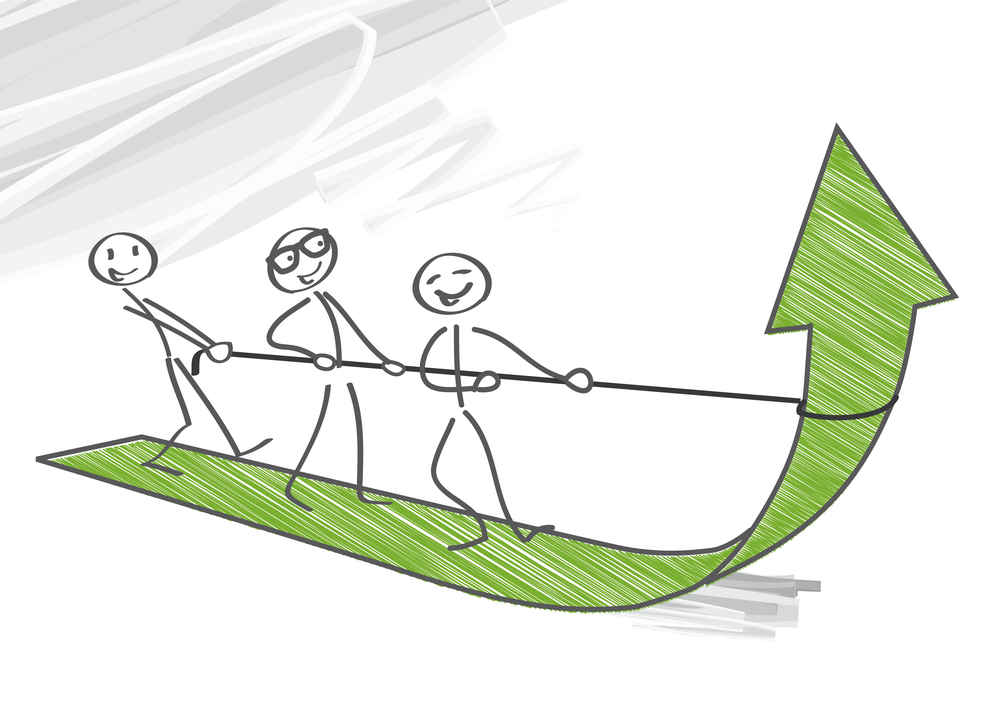


Organizational Alignment Creates Growth: What It Takes
High growth requires more than ambition—it demands a deliberate mindset, and it’s not for every company. McKinsey research shows that only about 12 percent of companies achieve more than 10 percent annual revenue growth. Those that do share two critical behaviors:
The Job of Leaders to Create Growth
We believe it is a leader’s responsibility to create both organizational alignment and sustainable, profitable growth. While most companies aspire to grow profitably, achieving consistent, high-margin growth requires more than strategic ambition — it demands purposeful alignment across strategy, people, and processes. The effort is challenging, but the payoff is undeniable.
Based on organizational alignment research of 410 companies across eight industries, we found that highly aligned companies:
The Cost of Organizational Misalignment
When strategy, talent, and culture are out of sync, the results are costly — and often hidden. Misaligned organizations consistently underperform, wasting resources and leaving growth on the table. Consider the evidence:
The takeaway is clear: misalignment doesn’t just slow progress — it erodes both profitability and long-term value.
Let’s examine how alignment across strategy, culture, and talent drives growth..
For high growth, a successful strategy retreat should deliver clear direction, focused energy, meaningful purpose, and compelling inspiration. At its core, an effective strategy defines where to play and identifies the critical few collective actions required to win. Answering these seven questions is essential:
— What specific big strategic bets will achieve rapid, profitable growth?
— How will strategic success be measured?
— Is your organization’s core purpose and direction inspiring enough?
— Is your strategy clearly understood by all key stakeholders?
— Do stakeholders believe the strategy positions everyone for success?
— Is your ideal target customer clearly defined and agreed upon?
— Are your offerings unmistakably differentiated from the competition?
When these questions are addressed and fully aligned across the organization, a growth strategy becomes not just a plan on paper — it becomes a force that drives measurable growth.
Organizational cultures emerge either by design or by default. Some strong cultures propel growth and performance, like Southwest Airlines, while others can undermine it, as seen with VW, Wells Fargo, or Uber.
One thing is clear: if leaders fail to understand, shape, and align culture with their growth strategy, peak performance is impossible. Our research shows that cultural factors account for 40% of the difference between high- and low-performing companies.
The type of culture you cultivate should reflect your growth priorities across ten research-backed dimensions of culture. For companies focused on innovation and cutting-edge offerings to drive growth, a climate of open communication, creative thinking, and cross-functional collaboration is essential. Conversely, if your growth strategy relies on a proven product with high-volume consistency, a culture emphasizing process rigor and scalability is critical.
Workplace culture is not about right or wrong — it’s about alignment. The way work gets done must support where the company is headed, translating growth strategy into high growth ways of working every day.
We found that talent — how you attract, develop, engage, and retain your workforce — accounts for 29% of the difference between high- and low-performing companies. High-growth organizations intentionally build and manage their workforce to create a sustainable competitive advantage that competitors cannot replicate.
To set people up for success and enable growth, leaders must ensure key talent practices are in place to help employees thrive:
— Behavioral interviewing to identify potential and fit
— Structured onboarding for new employees to start people off on the right foot
— People manager assessment centers to benchmark management capabilities
— Leadership simulation assessment centers to prepare future leaders
— Sales rep assessment centers to hire and develop sales teams
— Customized training programs tailored to accelerate strategic growth priorities
— Performance management that measures and rewards growth
— Succession planning to secure critical growth roles
— Business strategy simulations to help connect decisions to growth
— Action-learning leadership programs to move growth initiatives forward
— Employee engagement and retention initiatives to sustain commitment
When strategy, culture, and talent are fully aligned, the shared practices and organizational capabilities become a growth engine — capable of delivering both sustainable growth and organizational health.
The Bottom Line
Growth — both for your people and your business — depends on alignment across strategy, culture, and talent. When even one of these pillars is out of sync, organizational performance suffers and long-term success is jeopardized. True high growth emerges only when all three work in concert, creating a company that is focused, resilient, and driven by growth.
To learn more about how organizational alignment creates growth, download Organizational Alignment Research — The Key Ingredients to High Performance

Tristam Brown is an executive business consultant and organizational development expert with more than three decades of experience helping organizations accelerate performance, build high-impact teams, and turn strategy into execution. As CEO of LSA Global, he works with leaders to get and stay aligned™ through research-backed strategy, culture, and talent solutions that produce measurable, business-critical results. See full bio.

Mar 19,2026
 0
0

Mar 16,2026
0
Mar 09,2026
0
Mar 05,2026
0
Mar 02,2026
0

Feb 23,2026
0

Feb 11,2019
12 K

Apr 18,2017
10 K

Nov 20,2016
6 K

Oct 02,2017
5 K
Explore real world results for clients like you striving to create higher performance