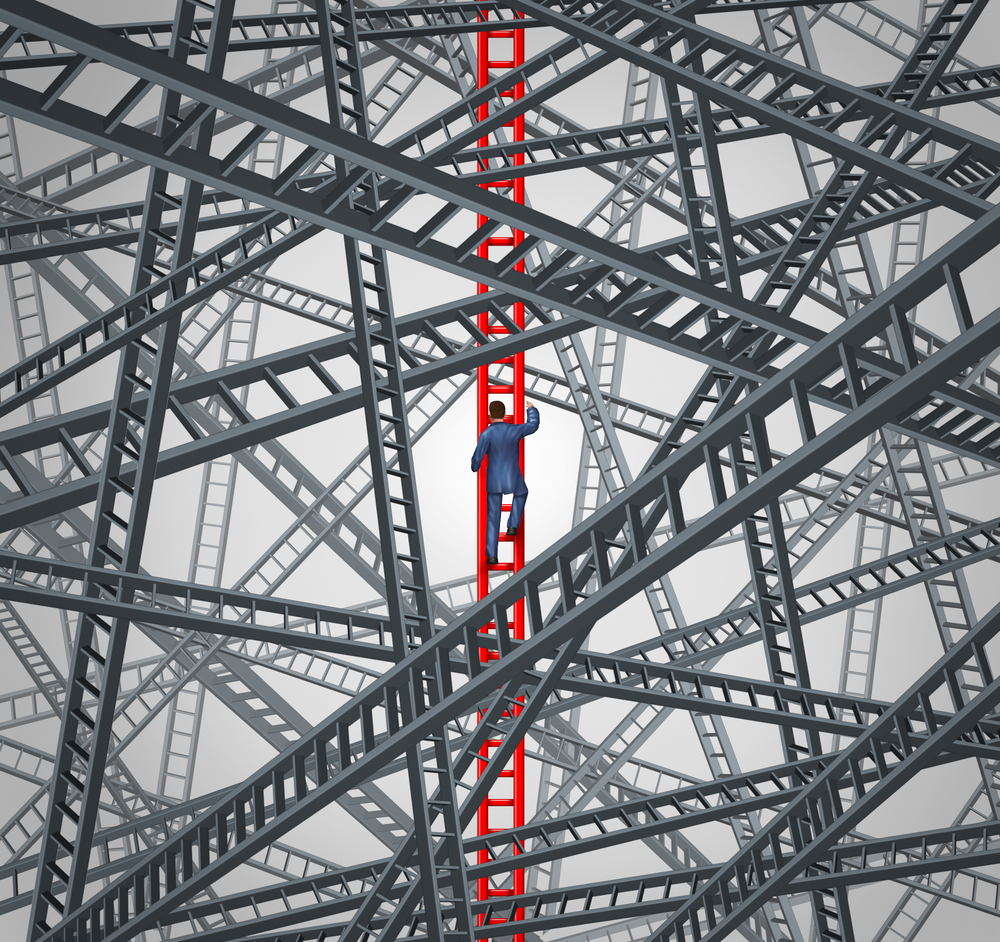


How Change Leaders Leverage Organizational Structure During Change
Data from change management simulation consistently shows a clear pattern — the most effective change leaders don’t treat organizational structure as a backdrop. They use it as a strategic lever to:
What is Organizational Structure, Really?
Before leaders can use structure strategically, they need to understand what it actually entails. Organizational structure is more than an org chart — it is the system that shapes how work gets done. At its core, it includes the
When these elements are aligned, work flows. When they are not, friction builds quickly.
In practice, breakdowns in structure show up in familiar ways:
Change management training repeatedly highlights the same insight: when roles, success metrics, or strategic priorities lack clarity, teams struggle to perform beyond the sum of their parts.
That is not a motivation problem. It is a design problem.
Strong change leaders recognize this early. Instead of pushing harder on change communication or engagement alone, they step back and examine whether the structure itself is enabling or constraining performance.
Organizational Structure Matters During Change: The Structure Lens
During organizational change, change leaders leverage organizational structure — what we in the change management consulting world call the Structure Lens. The Structure Lens includes the following elements that are used to coordinate and accomplish work:
If there is any strategic ambiguity or dissension regarding who does what, when they do it, how they do it, and why they do it, the chances of your change initiative succeeding are greatly diminished.
The Structure Lens of Change Management
Focusing on the Structure Lens during organizational change is particularly important when:
When organizational structure is treated as a strategic tool — not an afterthought — change efforts move faster and stick longer. The most effective leaders use structure deliberately to translate ambition into execution. Four practices consistently separate those who gain traction from those who stall:
This creates a direct line of sight between strategic goals and day-to-day activities, reducing confusion and accelerating adoption.
The goal is not more documentation — it is shared understanding that enables faster, better decisions.
The Bottom Line
If organizational structure is not actively shaping execution, it can undermine your desired changes. Strategy and communication alone are not enough — people ultimately follow the systems, incentives, and processes around them. When structure is aligned with intent, change gains traction, execution sharpens, and results follow.
To learn more about how the best change leaders succeed, download The Top 5 Science-Backed Ways Leaders Should View Change

Tristam Brown is an executive business consultant and organizational development expert with more than three decades of experience helping organizations accelerate performance, build high-impact teams, and turn strategy into execution. As CEO of LSA Global, he works with leaders to get and stay aligned™ through research-backed strategy, culture, and talent solutions that produce measurable, business-critical results. See full bio.



Aug 17,2026
 0
0

Feb 11,2019
13 K

Apr 18,2017
11 K

Nov 20,2016
6 K

Oct 02,2017
6 K
Explore real world results for clients like you striving to create higher performance