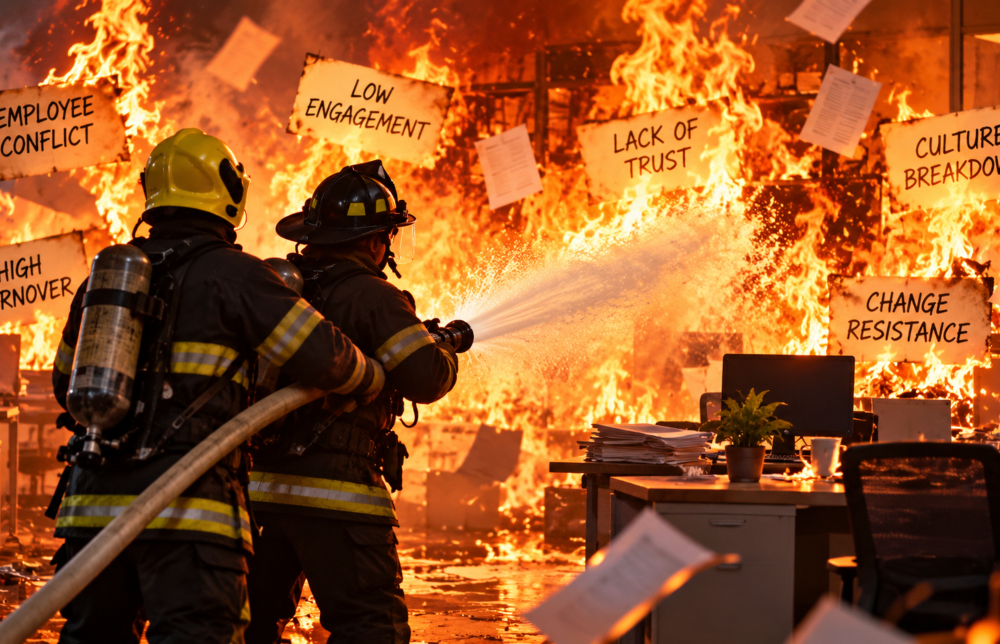


How to Improve Team Dynamics: Proven Strategies for Better Performance
High performing organizations require more than individual performance. Sustained strategic growth requires people in teams and across functions to work effectively together. That is why team dynamics matter; they shape how individuals and teams:
What Are Team Dynamics?
We define team dynamics as the behavioral relationships and interaction patterns among team members. Project postmortem analyses highlight that they greatly influence individual, team, and organizational:
Why Team Dynamics Matter
Strong team dynamics are a critical driver of organizational performance. When people work well together, productivity increases, innovation accelerates, and teams adapt more effectively to change. Conversely, weak team dynamics can undermine performance, trust, and engagement, causing even highly talented teams to fall short of their potential.
While short-term wins and individual heroics may temporarily mask underlying dysfunction, misalignment, poor communication, and unresolved conflict eventually erode collaboration and results. Sustainable success requires more than a collection of capable individuals. It depends on people aligning around shared goals, leveraging one another’s strengths, and consistently working together as a cohesive unit.
The quality of team dynamics influences how effectively teams:
Ultimately, how people work together is just as important as what they work on. Teams with strong dynamics consistently outperform those hampered by mistrust, ambiguity, or internal politics because they create an environment where collaboration, ownership, and high performance can thrive.
7 Signs of Strong Team Dynamics
High-performing teams often exhibit several common characteristics that improve collaboration and decision-making:
7 Common Challenges That Undermine Team Dynamics
Even talented teams can struggle when certain obstacles emerge. Some of the most common challenges from 360 degree feedback data that erode morale and reduce team effectiveness include:
Improving team dynamics requires intentional effort from both leaders and team members. High performance cultures:
Before you tackle personalities and team conflict, make sure that you and the team are clear about the team’s fundamental purpose and direction, how individual and team success is measured, the expected code of conduct team members must follow, and how everyone’s work aligns with organizational priorities.
Organizational culture assessment data shows that team members perform better when they understand the answers to three fundamental team questions:
— Who does what?
— What are the key interdependencies?
— How does everyone’s work contribute to team and organizational objectives?
The Bottom Line
Team dynamics impact how teams perform and behave. Positive team dynamics accelerate organizational health and strategy execution, while negative dynamics create barriers to both people and business success. Are your leaders creating an environment where individuals and teams consistently perform at their peak?
Misaligned teams slow projects, create friction, and undermine results. Download 5 Steps to Align Project Teams to Pull in the Same Direction to learn how to build alignment, strengthen collaboration, and help your teams perform at their best.

Tristam Brown is an executive business consultant and organizational development expert with more than three decades of experience helping organizations accelerate performance, build high-impact teams, and turn strategy into execution. As CEO of LSA Global, he works with leaders to get and stay aligned™ through research-backed strategy, culture, and talent solutions that produce measurable, business-critical results. See full bio.


Aug 17,2026
 0
0

Feb 11,2019
13 K

Apr 18,2017
11 K

Nov 20,2016
6 K

Oct 02,2017
6 K
Explore real world results for clients like you striving to create higher performance