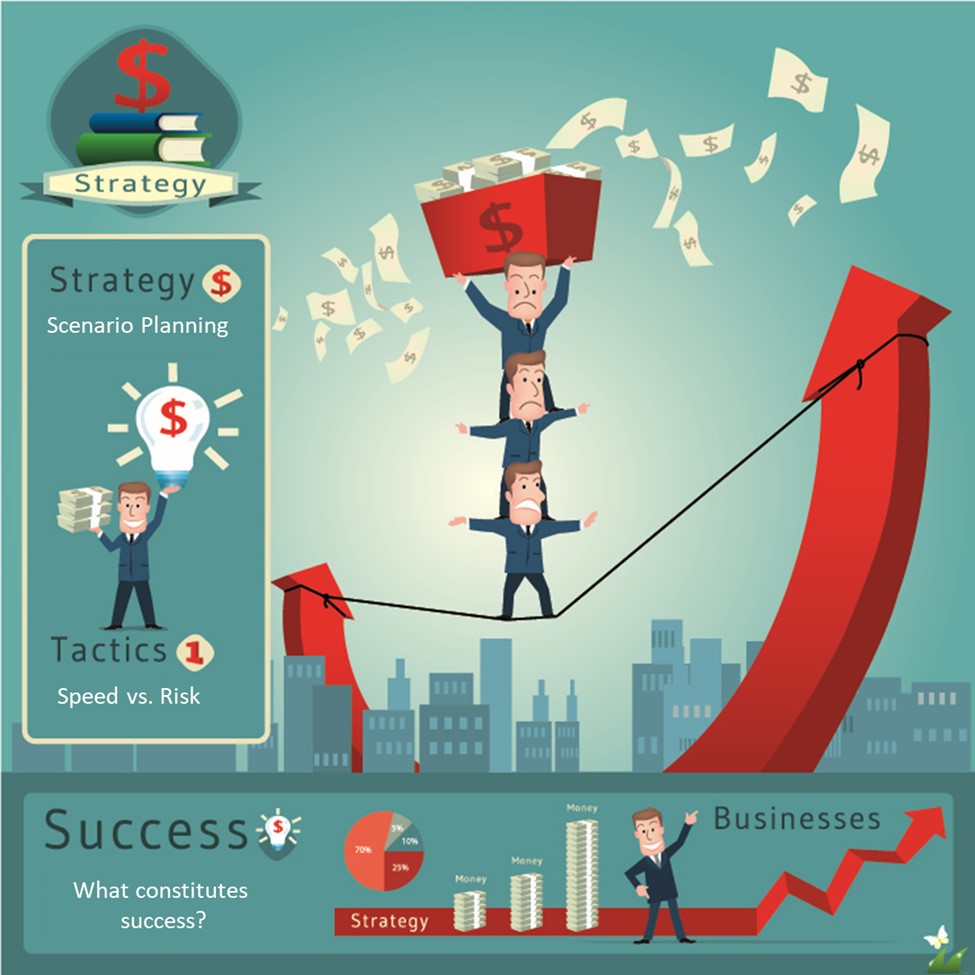


How Top Leaders Balance the Urgent and Important During High Growth
During periods of steady revenue growth — typically under 20% — many leaders rely on the Urgent-Important Matrix to guide how they allocate time, attention, and resources. Leadership teams find it a useful lens for sorting competing demands and making deliberate choices about what deserves focus.
But in high-growth environments, organizational culture assessment analyses show that:
What once felt like a structured prioritization exercise becomes a daily test of judgment under pressure.
Where Leaders Get It Wrong
Under pressure, even experienced leaders drift toward the urgent because it:
But over time, an over-rotation toward constant urgency creates hidden costs:
Growth may continue, but the cultural foundation weakens.
What Effective Leaders Do Differently
Leaders who navigate high-growth successfully do not abandon urgency — they redefine it. They create clarity about what is truly urgent versus what is merely loud. They protect time and resources for what is important, even when it is uncomfortable to do so.
They also recognize that in high-growth environments, the goal is not balance — it is intentional trade-offs. Every “yes” to urgency must be weighed against what it displaces.
Most importantly, they build organizational discipline. They:
Because in the end, high growth does not eliminate the tension between urgent and important — it amplifies it. And how leaders respond to that tension ultimately determines whether growth becomes a catalyst for long-term success or a source of long-term risk.
Not So Simple in Practice
In stable environments, the Urgent-Important framework feels intuitive and actionable. Prioritize what is important but not urgent — strategy, forecasting, scenario planning, preparation — and over time you reduce the volume of crises demanding immediate attention. The logic holds.
Consider high-performing fire departments. The best spend nearly all their time — often cited as up to 98% — on prevention, education, and readiness rather than actively fighting fires. The payoff is fewer emergencies to begin with.
High-growth companies, however, do not have that luxury. They start with a backlog of “fires,” not a blank slate. And unlike the clean simplicity of a two-by-two matrix, their reality is multidimensional. As one leader put it:
The noise level rises, decision cycles compress, and leaders are forced to make calls with incomplete information and limited time.
Complicating matters further, not all initiatives carry equal weight. They vary widely in visibility, risk, potential reward, and certainty. Some leadership decisions shape the company’s trajectory. Others simply maintain momentum. Treating them as equivalent is where many teams go off track.
This is why high-growth organizations often struggle to simultaneously “run the business” and “change the business.” They are trying to meet immediate performance expectations while evolving systems, structures, and capabilities fast enough to sustain that growth.
The experience is often described the same way — driving 100 miles per hour while trying to change the tires. Leaders are expected to deliver today’s results while building tomorrow’s infrastructure, usually without the resources they would ideally want.
Research on organizational alignment points to a more pragmatic approach. Instead of attempting to resolve the tension between urgent and important, high-performing teams use strategy retreat facilitation to purposefully structure their efforts around high-impact, short-term initiatives that are tightly aligned with long-term priorities.
These efforts create visible progress in the near term while steadily advancing the broader strategy. The goal is not perfection — it is momentum with direction.
Short-Term Factors for Success
To be effective, these near-term initiatives share a few defining characteristics:
Long-Term Factors for Success
In fast-scaling organizations, these short-term efforts naturally consume most of the attention and resources. That is appropriate. But it is also where many teams get stuck.
Project postmortem data consistently shows that organizations that break out of perpetual firefighting deliberately invest in important, non-urgent work alongside execution. This includes forecasting, scenario planning, risk management, and actively managing stakeholder expectations.
The shift is subtle but critical. Instead of choosing between urgent and important, effective leaders integrate them. Short-term execution informs long-term thinking. Long-term clarity sharpens short-term decisions. One reinforces the other.
Practically, the ability to balance the urgent and important during high growth requires protected time. Many leaders estimate that at least one day per week should be dedicated to stepping back — thinking strategically about the business, the team, and what is coming next. In reality, leadership simulation assessment data says that most fall short. And the gap shows up later as avoidable complexity, misalignment, and risk.
The Bottom Line
Not all work carries equal value, no matter how urgent it appears. In high-growth environments, leaders must make deliberate trade-offs — delivering what matters now while investing just enough in the future to avoid preventable breakdowns. The goal is not to eliminate the tension, but to manage it with clarity and discipline so that growth does not outpace the organization’s ability to sustain it..
To learn more about how to better balance the urgent and important during high growth, download 5 Warning Signs that Your Managers Are Falling Behind Strategically

Tristam Brown is an executive business consultant and organizational development expert with more than three decades of experience helping organizations accelerate performance, build high-impact teams, and turn strategy into execution. As CEO of LSA Global, he works with leaders to get and stay aligned™ through research-backed strategy, culture, and talent solutions that produce measurable, business-critical results. See full bio.



Aug 17,2026
 0
0

Feb 11,2019
13 K

Apr 18,2017
11 K

Nov 20,2016
6 K

Oct 02,2017
6 K
Explore real world results for clients like you striving to create higher performance