


Do Not Skip Current State Analysis During Change
It is tempting for leaders to accelerate into defining a bold future state when launching a critical change initiative. However, project postmortem data consistently shows that organizations that bypass a rigorous, shared understanding of the current state undermine their own efforts from the start.
Without alignment on what is actually happening today — across processes, behaviors, mindsets, capabilities, and constraints — leaders risk:
A clear, fact-based view of the current state creates the foundation for credible planning, sharper prioritization, and realistic execution. Skipping this step does not save time. It simply defers complexity — and often amplifies it later when misalignment, rework, and change resistance surface.
What the Change Management Research Says
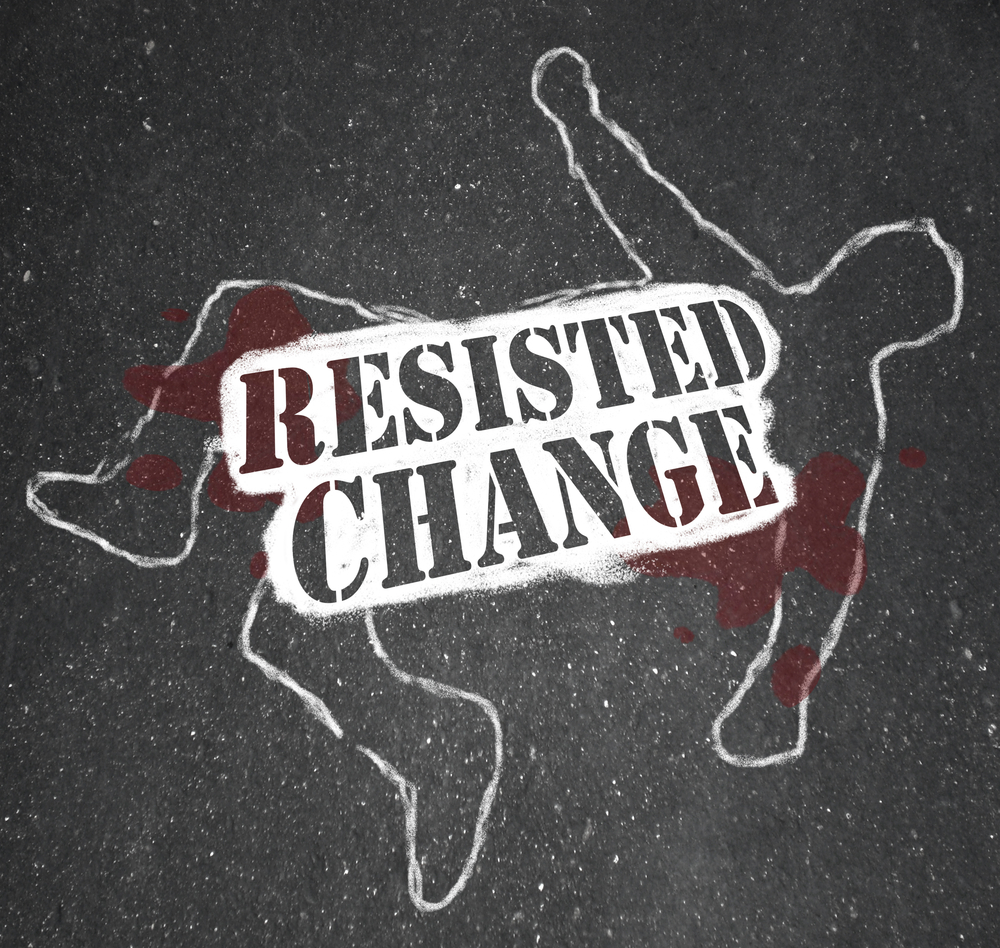
If you skip doing a thorough current state analysis as part of your change initiative, you could become a failed change program research statistic.
Investing the time to establish real clarity about the current state does more than inform planning — it brings the right people into the process early and builds alignment and commitment through a shared, unvarnished view of reality. What often feels like a slow, front-end step is, in practice, an accelerant. When stakeholders see their world accurately reflected, they:
That is how you co-create a credible future state — and dramatically compress the “hearts and minds” phase of change.
Without that grounding, leaders are operating on partial truths. And partial truths lead to fragile strategies. When people cannot see how the change connects to what is actually happening today, it becomes harder to create meaning, sustain optimism, or maintain alignment as ambiguity inevitably rises. Large-scale change introduces enough uncertainty on its own — it does not need the added friction of competing interpretations of reality.
A strong, shared view of the “whole board” changes the dynamic. It allows change leaders to:
Conducting a thoughtful current state analysis during change equips you to actively involve those most affected and communicate the why, what, when, who, and how of change with precision and credibility — turning potential skeptics into informed participants.
Consider the reality. Without an accurate, systemic, and shared understanding of the current state, decisions about the future are built on assumptions rather than evidence. That weakens judgment, limits creativity, and often leads to solutions that look compelling on paper but fail under real-world conditions.
Stakeholders feel this gap immediately. When the starting point is unclear or contested, the entire change effort becomes harder to trust, align around, and execute. In our change management consulting experience, four predictable problems emerge when organizations move forward without current state clarity:
A Practical Roadmap for Organizational Change
Every meaningful transformation requires more than ambition — it demands a clear, credible path from today’s reality to a better future. Like any high-stakes journey, you cannot chart the optimal route without first knowing exactly where you are starting. Skipping that clarity introduces unnecessary risk, rework, and misalignment.
In change management simulations, this starting point is the “As-Is” — the current state in its full complexity. Getting this right is not a diagnostic exercise for its own sake; it is how you move beyond surface-level symptoms to identify and quantify root causes. That distinction matters. Treating symptoms may create short-term movement, but only addressing root causes creates sustainable change.
A rigorous current state analysis during change also creates a shared fact base. It aligns leaders and stakeholders around what is actually happening — not what is assumed, remembered, or politically convenient. That shared understanding becomes the anchor for better decisions, more targeted interventions, and a sequence of actions that reflects real constraints and opportunities.
To be useful, the current state must be understood consistently across several dimensions. At a minimum, leaders should align on a common view of the current:
When these elements are aligned into a single, coherent view, leaders gain the clarity required to make sharper trade-offs, anticipate friction points, and design change that reflects the organization as it is — not as it is imagined.
5 Common Traps of As-Is Analysis
Beyond the instinct to rush past root cause and current state work altogether, there are several predictable pitfalls that can quietly undermine even well-intentioned change efforts. Avoiding these traps preserves the integrity of your analysis — and the credibility of everything that follows.
Taken together, these traps highlight a common theme: incomplete or distorted views of reality lead to fragile strategies. Disciplined, inclusive, and honest current state analysis is what separates change efforts that gain traction from those that stall under the weight of faulty assumptions and limited buy-in.
The Bottom Line
Experienced change leaders treat current state clarity as a critical starting point. When the organization lacks a shared, fact-based understanding of how things truly operate today, it distorts how people interpret what comes next. Do you have an accurate, organization-wide view of reality — and do your stakeholders agree on it?
To learn more about successful change management best practices, download the 5 Science-Backed Lenses of Change that Leaders Must Get Right

Tristam Brown is an executive business consultant and organizational development expert with more than three decades of experience helping organizations accelerate performance, build high-impact teams, and turn strategy into execution. As CEO of LSA Global, he works with leaders to get and stay aligned™ through research-backed strategy, culture, and talent solutions that produce measurable, business-critical results. See full bio.



Aug 17,2026
 0
0

Feb 11,2019
13 K
Apr 18,2017
11 K

Nov 20,2016
6 K

Oct 02,2017
6 K
Explore real world results for clients like you striving to create higher performance