

The Best Managers Know How and When to Manage Employee Performance
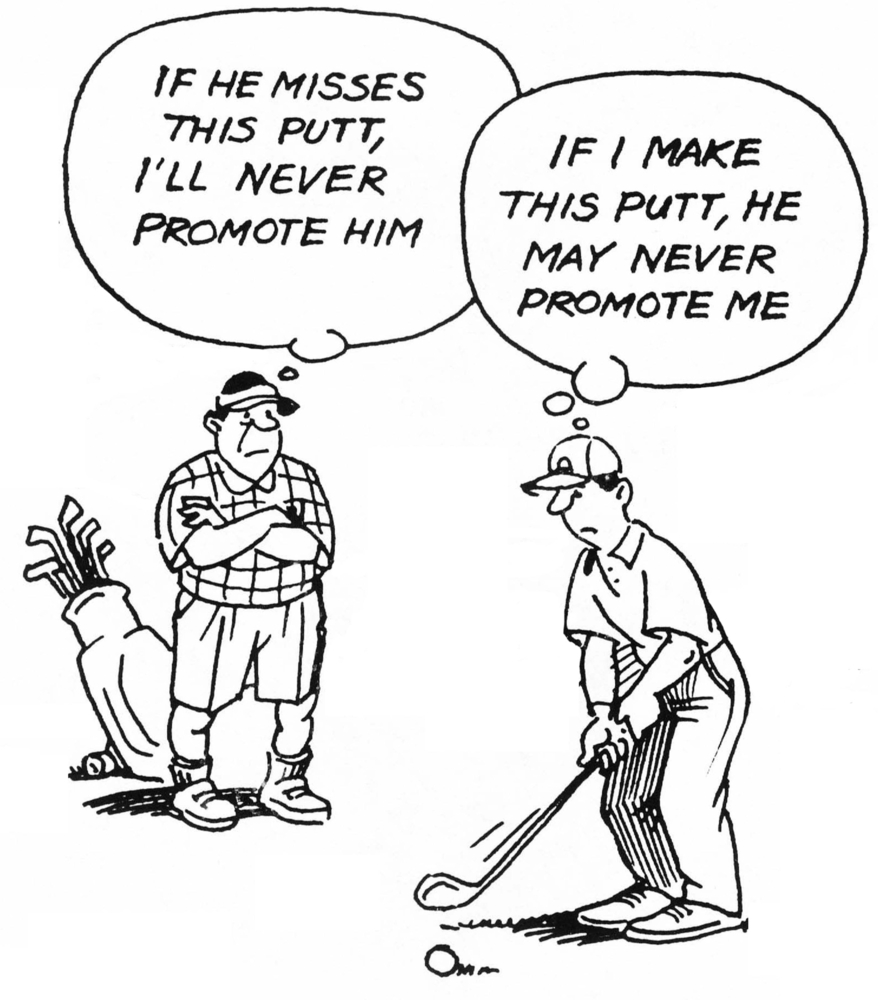
The cartoon captures a familiar challenge for new managers: unclear expectations leading to predictable frustration on both sides. Effective performance management isn’t about micromanaging — it’s about creating clarity, alignment, and ongoing dialogue. New managers who understand how and when to set expectations, give feedback, and course-correct early build trust, accelerate learning, and prevent small issues from becoming bigger ones.
Unclear Performance Expectations
In the cartoon, the employee assumes he should deliberately miss the putt to make his boss look good, while the boss intends to rate him positively only if he sinks it. This kind of mixed messaging derails the ability to manage employee performance long before real work begins. As a new manager, your job is to eliminate ambiguity so employees don’t waste energy guessing what “good” looks like. Clear expectations are the foundation that enables people to operate at their best.
Creating a High Performance Environment
Strong leaders don’t just ask for great performance — they engineer the conditions that make it possible. When you set clear expectations, remove obstacles, and foster accountability, individual performance naturally elevates. As those gains compound across the team, overall performance strengthens in ways that directly shape your success as a new manager.
Why Annual Performance Reviews Are Ineffective
The dreaded once-a-year review has fallen out of favor — and for good reason. A single annual conversation can’t possibly capture the realities of someone’s performance over six or twelve months. By the time you’re trying to recall what happened, important insights have blurred, and meaningful coaching points — both positive and negative — are lost.
When feedback lags, small issues go unresolved and quietly erode an employee’s engagement and effectiveness. At the same time, real-time learning opportunities slip by unnoticed. The result is predictable: you lose the momentum and influence needed to help your team member improve when it actually matters. Continuous, timely conversations do what annual reviews can’t — they keep performance aligned, supported, and moving forward.
How Often Should You Provide Performance Feedback?
A formal process still matters. Employees need a reliable way to understand where they stand, how merit decisions are made, and what development priorities should guide their growth. A structured system also keeps managers accountable for actively supporting and developing their people rather than leaving performance to chance.
But structure alone isn’t enough. Both managers and employees benefit far more from ongoing, informal check-ins that surface issues early, reinforce positive behaviors, and keep progress visible. Frequent, low-stakes conversations build alignment and trust in ways an annual or semiannual review simply can’t match. Ideally, your new manager training equips you with the skills to make these everyday performance discussions a natural part of how you lead.
An Example of a Good Idea Gone Bad
A local school district recently tried replacing traditional numeric grades with narrative comments on student behavior, effort, and progress, issuing these report cards just twice per year. The expectation was clear: teachers would feel less burdened, students would experience less performance pressure, and parents would focus more on learning and growth than rankings. In reality, none of these outcomes materialized.
The takeaway is clear: whether in schools or the workplace, performance management works best when it is regular, meaningful, accurate, timely, fair, and transparent. Employees need to know where they stand, receive recognition for achievements, and get actionable coaching for improvement. Consistent feedback motivates, guides, and elevates performance — and it’s the key tool for leaders who want to build and sustain high performing teams.
You will know you are on the right path when employees:
The Bottom Line
The most effective managers establish clear performance expectations from the start and reinforce them consistently. They meet regularly — weekly or biweekly — in dedicated one-on-one sessions to review goals, discuss progress, address challenges, and maintain alignment. Frequent, thoughtful feedback from engaged managers keeps employees focused, motivated, and performing at their best, turning potential into tangible results.
To learn more about how and when to manage employee performance, download The Top 5 Warning Signs That Your Performance Environment May Be in Trouble

Tristam Brown is an executive business consultant and organizational development expert with more than three decades of experience helping organizations accelerate performance, build high-impact teams, and turn strategy into execution. As CEO of LSA Global, he works with leaders to get and stay aligned™ through research-backed strategy, culture, and talent solutions that produce measurable, business-critical results. See full bio.
Mar 23,2026
 0
0

Mar 19,2026
0

Mar 16,2026
0
Mar 09,2026
0
Mar 05,2026
0

Mar 02,2026
0

Feb 11,2019
12 K

Apr 18,2017
10 K

Nov 20,2016
6 K

Oct 02,2017
5 K
Explore real world results for clients like you striving to create higher performance