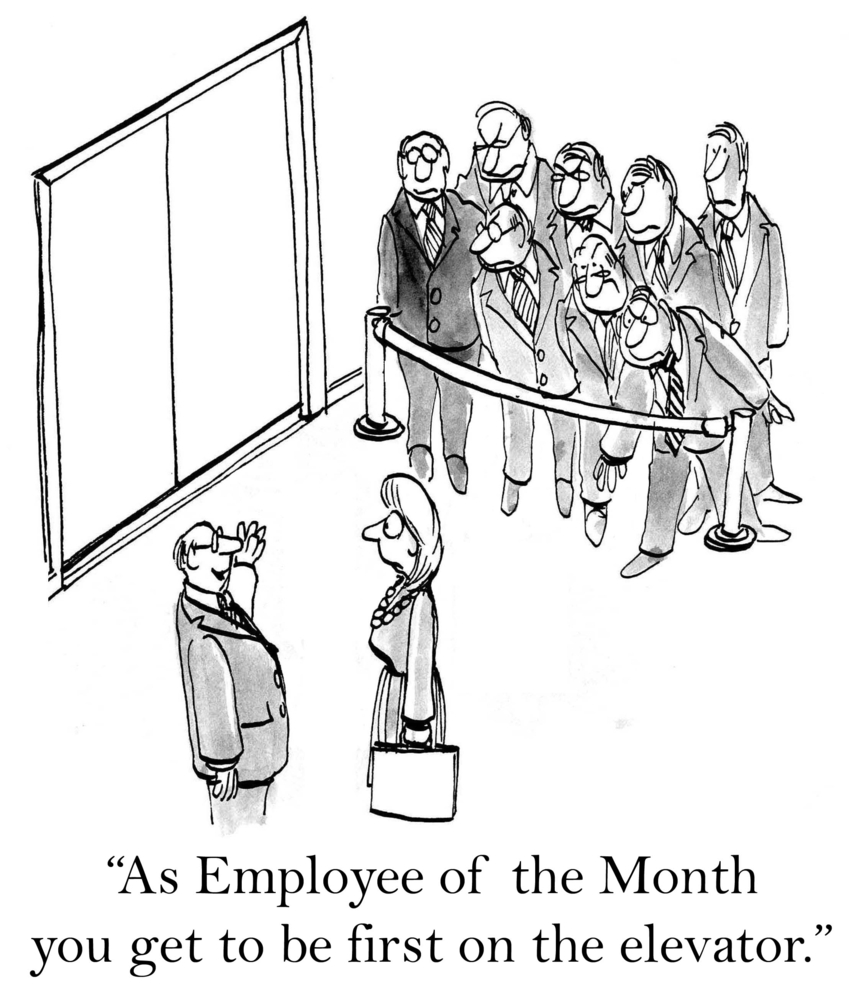


Do You Know How to Effectively Reward and Engage Employees?
People want their work to matter — and they want that to be acknowledged in a way that feels real. High-performing leaders understand that recognition is not about checking a box; it is about reinforcing the behaviors and outcomes that drive results. When rewards are meaningful, relevant, and proportionate to the impact delivered, they do more than motivate — they shape culture.
When Rewards Miss the Mark, Culture Pays the Price
We know from decades of organizational culture assessments that poorly designed reward systems do more harm than good. Three areas especially erode trust:
Instead of inspiring performance, they create confusion about what truly matters. Over time, this disconnect weakens accountability and dilutes the performance culture leaders are trying to build.
Recent employee engagement survey data make one thing clear: recognition is a critical driver of engagement. In highly engaged organizations, up to 65 percent of employees report confidence that their contributions will be acknowledged when they meaningfully impact business outcomes. That confidence matters — it signals that effort and results are:
When employees believe their work will be recognized:
Why Effective Recognition Drives Performance
Well-designed reward and recognition programs do more than celebrate success — they create a feedback loop that reinforces the right behaviors and unlocks employee potential. When done right, they:
The key is intentionality. Recognition must be timely, specific, and tied directly to outcomes that matter. Anything less risks becoming noise.
3 Research-Backed Strategies to Reward and Engage Employees Effectively
Employee recognition is not a feel-good initiative — it is a performance lever. Decades of research in organizational psychology and behavioral economics consistently show that how you reward people directly shapes:
According to Gallup, employees who feel recognized are significantly more engaged, while research published in the Harvard Business Review highlights that meaningful recognition strengthens both motivation and retention. The implication is straightforward: if your recognition strategy is off, your performance culture will be too.
In addition to taking meaningful and visible employee engagement actions after every survey, here are three research-backed strategies that actually move the needle.
A well-placed, sincere recognition — delivered privately or publicly depending on the individual — signals that effort and outcomes are seen. Public recognition, when appropriate, amplifies the message by showing others what success looks like. Private recognition, when preferred, reinforces trust and respect.
This becomes even more critical during periods of uncertainty. In moments of organizational disruption — such as restructuring or acquisition — employees are not just looking for answers; they are looking for acknowledgment. Leaders who openly recognize the stress, ambiguity, and effort required to navigate change build credibility. Silence, on the other hand, creates distance.
Stay close enough to your team to know when recognition is needed most. In difficult moments, acknowledgment is not a “nice to have” — it is stabilizing.
For one employee, flexibility may be the ultimate reward. For another, visibility with senior leadership may matter more than money. Others may value time off, small but thoughtful gestures, or opportunities for growth. The point is not to spend more on bonuses — it is to pay closer attention.
Leaders who take the time to understand individual preferences can align rewards and consequences with what people actually care about. This does two things: it increases the perceived value of the reward and signals that the individual is known, not just managed.
Personalization requires effort, but the return is disproportionate. When recognition feels earned and relevant, it reinforces the behaviors you want repeated.
High performers notice quickly. When underperformance goes unchecked, it erodes trust, fuels resentment, and ultimately disengages your best people. No amount of recognition can offset a lack of accountability.
Effective leaders treat underperformance as a performance issue, not a personal one. They provide clear expectations, targeted coaching, measurable goals, and defined timelines. Feedback is direct, private, and constructive — with a clear understanding of consequences if improvement does not occur.
In this context, “recognition” for underperformers is about clarity. People deserve to know where they stand and what is required to succeed. When handled well, this approach protects your culture and reinforces fairness.
The Bottom Line
Reward and recognition are not peripheral — they are central to how high performance cultures are built and sustained. When recognition is specific, personalized, and paired with real accountability, it drives engagement, reinforces standards, and keeps your best people fully invested.
To learn more about how to more effectively reward and engage employees, download Top 10 Most Powerful Ways to Boost Employee Engagement

Tristam Brown is an executive business consultant and organizational development expert with more than three decades of experience helping organizations accelerate performance, build high-impact teams, and turn strategy into execution. As CEO of LSA Global, he works with leaders to get and stay aligned™ through research-backed strategy, culture, and talent solutions that produce measurable, business-critical results. See full bio.


Aug 17,2026
 0
0

Feb 11,2019
13 K
Apr 18,2017
11 K

Nov 20,2016
6 K

Oct 02,2017
6 K
Explore real world results for clients like you striving to create higher performance