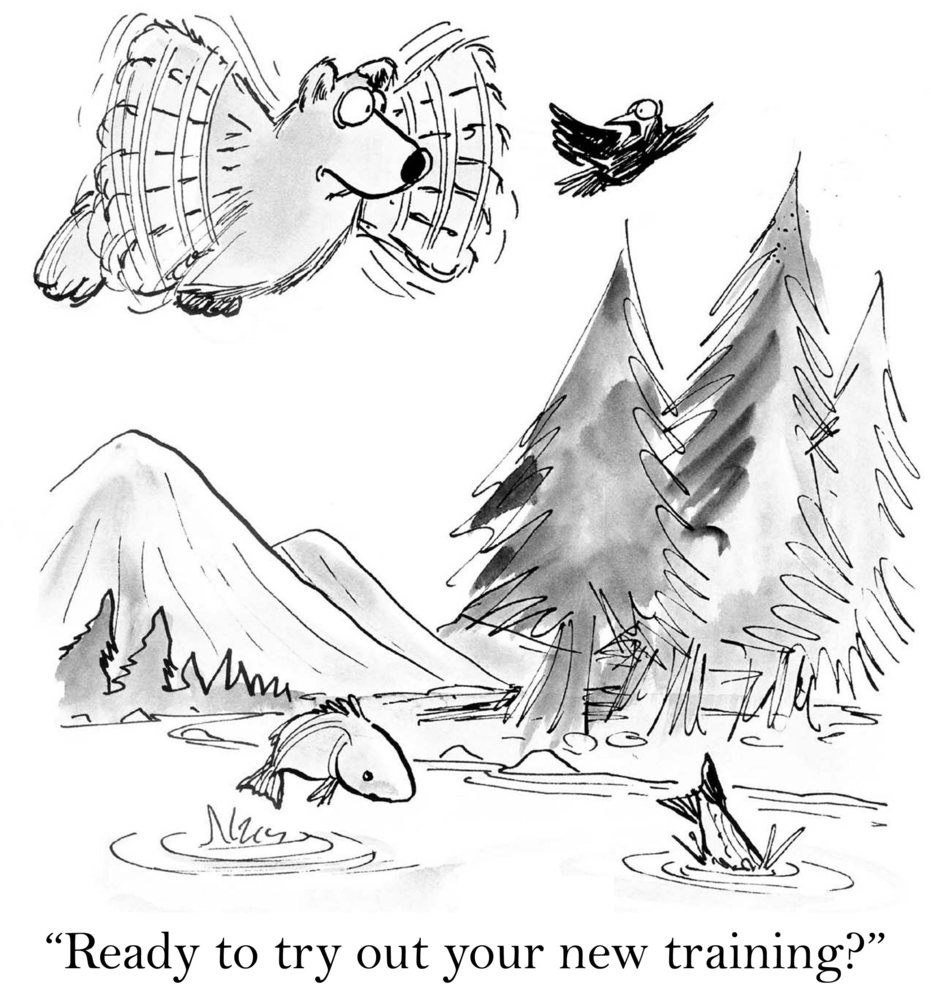


What is Wrong with Corporate Training Today?
Last year U.S. companies collectively spent $98?billion on employee training and development. With that kind of investment, corporate training is meant to empower employees, boost performance, and create measurable business impact. Yet countless organizations invest millions in training programs that fail to deliver measurable or lasting results. Research shows that nearly 70% of corporate learning initiatives do not achieve their intended business outcomes. The problem isn’t the people — it’s the way training is designed, implemented, and measured.
Project postmortem data reveals a recurring issue: many instructional designers and training practitioners lack a clear, strategic approach to learning initiatives. Too often, their training strategy fails to thoroughly define critical elements, including:
The business problem the training is intended to solve.
What success looks like for participants, their managers, and the organization overall.
Why training is the appropriate solution to achieve the desired outcomes.
Organizational requirements needed to ensure new skills and behaviors are consistently applied on the job.
A rollout strategy that integrates learning into the flow of work to drive tangible results.
Without clarity in these areas, even well-designed programs struggle to deliver measurable business impact.
Five Proven Steps to Improve Corporate Training
If you are in charge of learning and development at your company and understand what is wrong with corporate training today, you had better be sure that you:
Once you know that upskilling makes sense to help get you where you want to go, identify the critical few skills and competencies employees must master to consistently achieve the desired results — ensuring they align with and reinforce your organization’s unique culture.
Done right, you should get a clear picture of individual and learning aptitude, readiness, and prioritized competency gaps to close.
Provide ongoing opportunities for practice, coaching, and support so employees can consistently apply new skills on the job and achieve lasting results — while moving daily work forward. Without an action learning approach, the transfer of training will not occur and your investments will be wasted.
The Bottom Line
Establish a learning-focused environment both before and after training to ensure the right people acquire the right skills and can make a meaningful impact. Without this foundation, behavior and performance improvements are unlikely to stick.
To learn more about taking your corporate training to the next level, download the Top 5 Training Strategies and Key Mistakes to Avoid

Tristam Brown is an executive business consultant and organizational development expert with more than three decades of experience helping organizations accelerate performance, build high-impact teams, and turn strategy into execution. As CEO of LSA Global, he works with leaders to get and stay aligned™ through research-backed strategy, culture, and talent solutions that produce measurable, business-critical results. See full bio.

Mar 23,2026
 0
0

Mar 19,2026
0

Mar 16,2026
0

Mar 09,2026
0
Mar 05,2026
0
Mar 02,2026
0

Feb 11,2019
12 K

Apr 18,2017
10 K

Nov 20,2016
6 K

Oct 02,2017
5 K
Explore real world results for clients like you striving to create higher performance