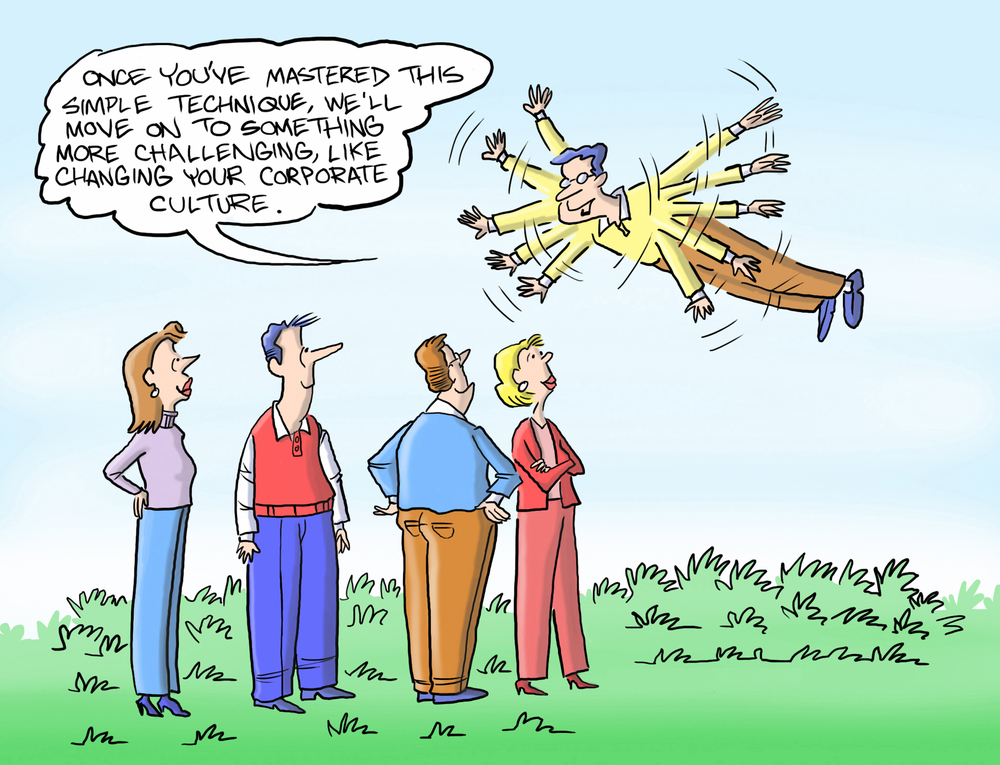


A Powerful Corporate Culture Can Propel a Strategy Forward
Building a truly powerful corporate culture is challenging — and replicating it is even harder. Yet, if your goal is to elevate both business outcomes and employee performance, intentionally shaping your culture may be the single most impactful move you can make. Too often, corporate culture is misunderstood as merely creating a “fun” or “happy” workplace, or being recognized as a great place to work.
We define corporate culture differently.
A Powerful Corporate Culture Defined
Culture is the engine behind organizational behavior — it shapes how people think, decide, and act every day. Your workplace culture is the heartbeat of your company, reflecting the shared values, team norms, assumptions, and business practices that guide daily behavior. Every organization has a culture, but no two are alike.
Put simply, culture is how business actually gets done — beyond policies, titles, or mission statements.
A Powerful Corporate Culture Impacts Your People and Your Business
Our organizational alignment research found that culture accounts for 40% of the difference between high and low performance in terms of:
Can a Workplace Culture Be Too Powerful?
The short answer: yes. The longer answer: it depends. We assess culture across three dimensions. For two of these, a strong culture is almost always an advantage — fueling alignment, engagement, and performance. But for the third dimension, an overly rigid or dominant culture can backfire, creating blind spots, stifling innovation, and even putting the business at risk. Boeing, VW, and Wells Fargo are three recent examples of powerful cultures that did harm.
At this level, culture can become too powerful. Pushing for higher performance without providing clarity, purpose, and accountability often backfires, creating stress and actually reducing results. The wrong kind or amount of pressure applied in the wrong way can undermine an entire organization.
Exceptional leaders understand how to calibrate performance pressure — knowing when to push, when to support, and how to create an environment where people thrive while driving results.
The Four Steps to Create a Powerful Corporate Culture that Is Aligned with Your Strategy
1. Define the Needed Culture
2. Assess the Current Culture
3. Create a Plan to Close the Key Culture Gaps
4. Close the Key Culture Gaps
If you want to learn more about how to design a powerful corporate culture, download A Purposeful and Aligned Organizational Culture – Your DNA for Success

Tristam Brown is an executive business consultant and organizational development expert with more than three decades of experience helping organizations accelerate performance, build high-impact teams, and turn strategy into execution. As CEO of LSA Global, he works with leaders to get and stay aligned™ through research-backed strategy, culture, and talent solutions that produce measurable, business-critical results. See full bio.



Aug 17,2026
 0
0

Feb 11,2019
13 K
Apr 18,2017
11 K

Nov 20,2016
6 K

Oct 02,2017
6 K
Explore real world results for clients like you striving to create higher performance