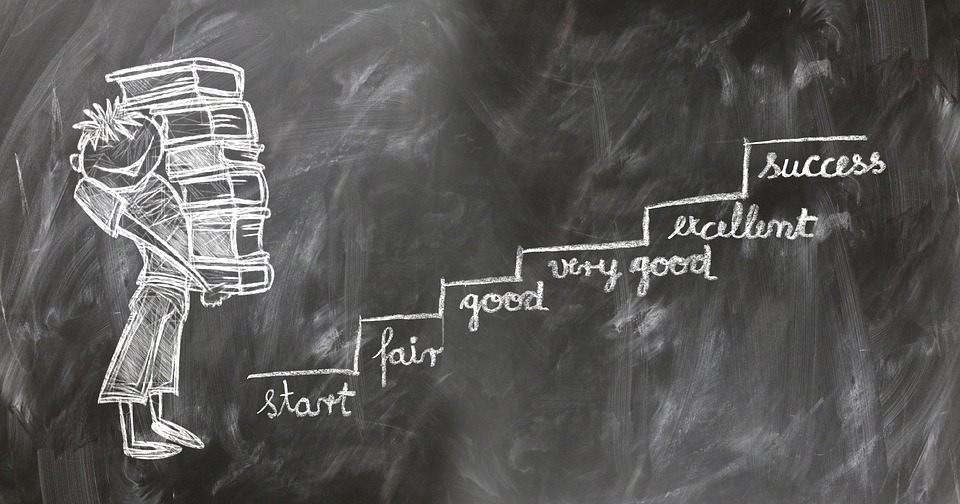


Raising Performance Expectations Can Dramatically Increase Performance
Leadership simulation assessment data shows that when leaders raise performance expectations thoughtfully, performance rises sharply. When people clearly understand that more is possible — and believe they are supported in getting there — they often achieve levels of performance that once seemed out of reach. The risk, however, is real. When expectations are pushed too high or too fast without the right capabilities, clarity, and support in place:
Joey Chestnut has won the Nathan’s Famous Hot Dog Eating Contest twelve of the past thirteen years. In that niche world, he is the undisputed performance benchmark. The more interesting question, however, is not about competitive eating. It is what his dominance teaches us about how performance expectations get set — and reset — at work.
Here is how expectations about what was “possible” shifted, and why everyone’s performance followed.
For 26 years, from 1974 to 2000, the winning total hovered between 10 and 20 hot dogs. That range became the accepted ceiling. Then, in 2001, Takeru Kobayashi shattered the record by eating 50 hot dogs in one sitting.
Once that barrier fell, everything changed.
From 2002 through 2016, the moment competitors saw that 50 hot dogs — once viewed as absurd — was achievable, nearly every serious contestant began eating 50 or more. The standard reset overnight. What had seemed impossible became table stakes.
Then, in 2016, Joey Chestnut pushed the ceiling again, consuming 70 hot dogs.
For decades, 20 and later 50 hot dogs felt untouchable, as if an invisible performance barrier was in place. It wasn’t physiology that changed. It was expectations. Once someone proved a higher level was possible, the collective definition of “high performance” shifted — and performance rose to meet it.
The Performance Barrier Phenomenon
When performance barriers are overcome, people are often able to perform at heretofore unimaginable levels. They simply needed to see someone else doing it to realize what was possible.
Like breaking the 4-minute mile barrier by Roger Bannister in 1954, it is amazing what can be accomplished once one person completely raises the performance bar. Just 46 days after Bannister set the record after people had been trying since 1886, John Landy set a new record with a time of 3 minutes 58 seconds. Then, just twelve months later, three runners broke the four-minute barrier in a single race. Since then, over one thousand runners have broken the 4-minute mile barrier – something that had once been considered impossible by the best athletes in the world.
We see this performance barrier phenomenon everywhere – in speed records, in computer chip sizes, in acrobatics, and the list goes on. Something is only impossible until it is shown to be possible.
The Application in Business for Leaders
Raising the performance bar is a cultural phenomenon that can be applied to the business world. You can think in macro terms about how production levels can be shattered or at the micro level of what could be accomplished on your team in terms of individual performance. Employees need only to see what is possible to inspire them to reach greater heights.
How to Get the Most Out of Your People
We believe that it is the responsibility of leaders to create the circumstances to get the most out of their people. We call a work environment that stimulates the individuals within that context to significantly improve their performance a high performance culture.
We think of workplace culture as the collective attitude, assumptions, and behaviors of a company’s workforce. Workplace culture can be measured by understanding the way people think, behave, and work. This includes the known and unspoken values and assumptions that drive key business practices and behaviors —especially in leaders and in who they hire, fire, and promote.
The Performance Impact of Culture
Our organizational alignment research at 410 companies across eight industries found that culture accounts for 40% of the difference between high and low performing companies in terms of profitable revenue growth, customer loyalty, leadership effectiveness, and employee engagement.
Three Things You Can Do as a Leader to Get the Most Out of Your People
In addition to showing what is possible, here’s what you can do as a leader to promote high performance on your team:
The Bottom Line
Do those three things as a leader — then step back. Remove artificial limits on how people think about what can be accomplished. Ask who decided it was impossible in the first place. It wasn’t Joey. It wasn’t Roger Bannister. And it wasn’t the many who followed once the barrier was broken. The real question is whether your team has the leadership, clarity, and belief required to run its own version of the four-minute mile.
To learn more about raising performance expectations, download How Much a Leader Should Push for Higher Performance

Tristam Brown is an executive business consultant and organizational development expert with more than three decades of experience helping organizations accelerate performance, build high-impact teams, and turn strategy into execution. As CEO of LSA Global, he works with leaders to get and stay aligned™ through research-backed strategy, culture, and talent solutions that produce measurable, business-critical results. See full bio.
Mar 02,2026
 0
0

Feb 23,2026
0

Feb 12,2026
0

Feb 12,2026
0

Feb 05,2026
0

Feb 02,2026
0

Feb 11,2019
12 K

Apr 18,2017
10 K

Nov 20,2016
6 K

Oct 02,2017
5 K
Explore real world results for clients like you striving to create higher performance