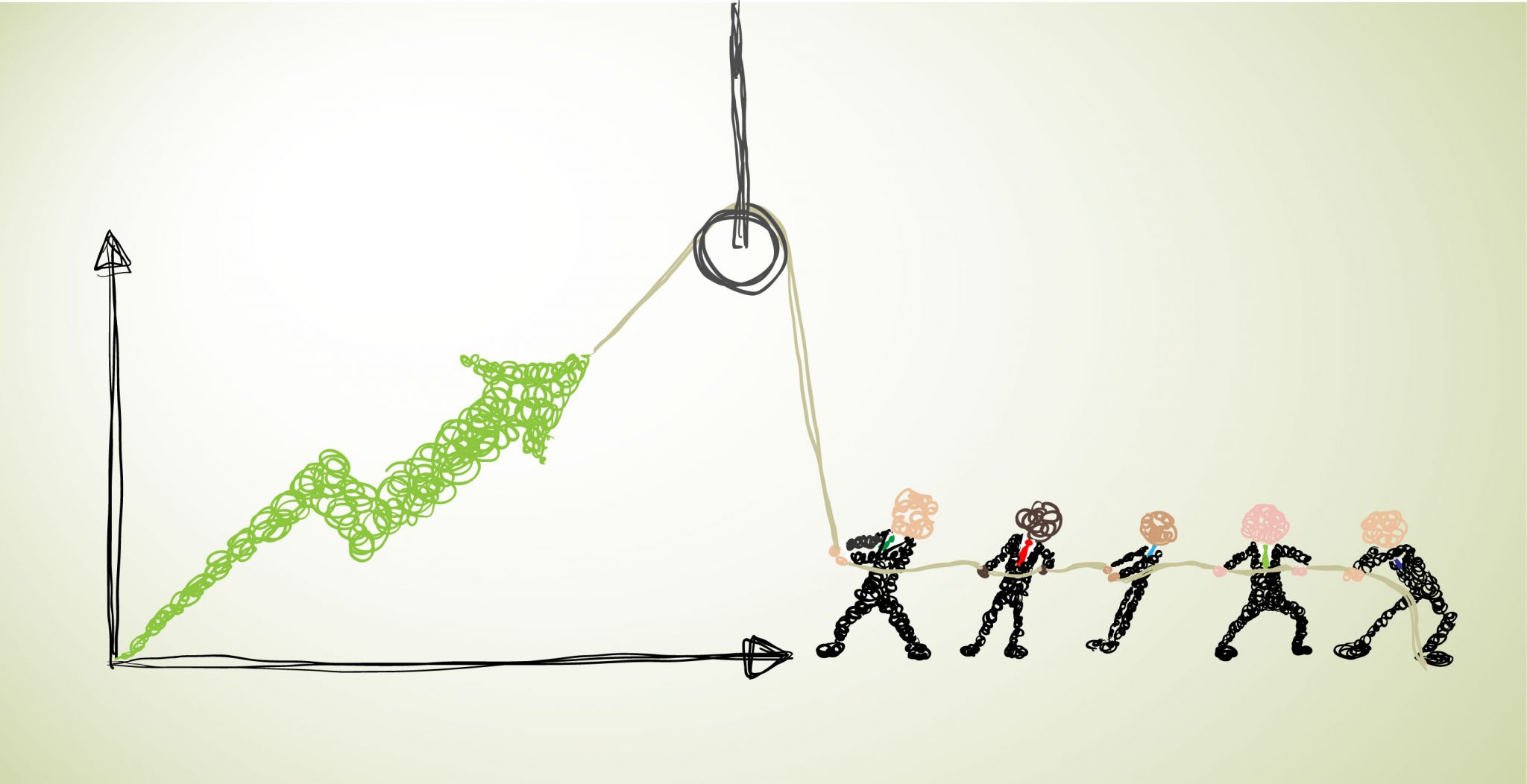


How to Align Sales Culture with Strategy for Measurable Revenue Growth
Sales strategy sets the direction and purpose. Sales culture determines whether you ever get there.
Organizations routinely invest in sophisticated go-to-market strategy retreats — only to see inconsistent sales strategy execution. The root cause is rarely the strategy itself. More often, it is a misaligned sales culture that:
When the way work gets done — beliefs, team norms, and daily behaviors — don’t reinforce the changes you seek, even the best-designed sales plans underperform.
Research: The Impact of Sales Alignment
Sales alignment occurs when sales culture operationalizes, supports, and accelerates sales strategy in a way that is both consistent and scalable. When sales culture and sales strategy move in sync, companies consistently outperform their peers. Our organizational alignment research shows that this alignment explains 71% of the performance gap between high- and low-growth companies. Organizations that achieve this cohesion:
A Common Misconception: Mistaking Sales Activity for Sales Effectiveness
Many sales leaders mistakenly define a high-performing sales culture by the sheer level of effort — assuming that more sales activity automatically translates into better sales results.. In response, they push teams to maximize sales activity — more calls, more meetings, more pipeline — while leaders track an ever-expanding set of metrics to monitor progress. The assumption is straightforward: if effort goes up, results will follow.
But sales activity, on its own, is not a growth strategy.
Modern CRM systems generate a wealth of data — capturing everything from customer interactions and deal progression to buying roles and engagement frequency. Yet volume does not equal value. Without a clear connection to strategic priorities, this data becomes noise.
Project postmortem analyses reveal that the real issue is not sales effort — it is sales alignment.
High-performing sales organizations don’t just measure what their teams are doing; they ensure that what they are doing actually matters. Every activity should tie back to a clearly defined sales objective — whether that is improving win rates, penetrating target accounts, increasing deal quality, shortening sales cycles, or expanding customer value. When that connection is missing, even disciplined sales teams can drift into low-impact work that feels productive but delivers little to the customer or the top line.
Clarity of purpose changes the equation. When sales teams understand how their actions directly contribute to desired outcomes:
Sales leaders gain visibility not just into activity levels, but into effectiveness — what is working, what is not, and where to adjust. True sales alignment is not about doing more. It is about doing what matters, consistently and well.
Align Sales Culture with Strategy to Get Lift
Unless your the culture — how and why work gets done — is fully aligned with your broader business and sales strategies your sales efforts will get diluted. Teams and the colleagues they rely on might be expending energy:
Sales Alignment Drives True Sales Optimization
The ultimate goal is sales optimization. Every decision should guide your team toward the behaviors that consistently generate the right deals with the right customers, executed in the most effective way. To build a sales-driven culture, all sales resources — time, talent, and investment — must be strategically focused on the opportunities that offer the greatest potential for profitable revenue growth.
To ensure your sales culture is fully aligned with business priorities — and positioned to maximize results — you need to:
An optimized sales strategy fosters clear agreement and alignment around:
— Your ideal target client profile where you should win the majority of the time
— The specific differentiators that set you apart in the eyes of target clients
— The critical few “big bets” that will drive profitable growth
— How success and failure will be measured at the company, team, and individual levels
With this clarity, sales teams can confidently define the sales processes and methodologies that will drive results, identify the key barriers standing in their way, and focus on the vital few actions that ensure they meet their most important objectives.
— Define what good looks like in terms of results and behaviors.
— Make performance standards transparent.
— Hold people accountable to both results and behaviors.
— Recognize those who exemplify the culture.
— Invest in sales coaching — or make tough decisions — when gaps persist.
A well-defined sales culture establishes guardrails — not to constrain performance, but to channel it in ways that are repeatable and scalable.
Alignment begins when those cultural expectations are translated into everyday business practices. This means clearly defining what sales needs from other functions to succeed — whether that is product clarity, operational support, or marketing alignment — and just as importantly, what sales must consistently deliver in return. When expectations are mutual and transparent, internal friction decreases and cross-functional execution improves.
Compensation plans, performance metrics, and recognition programs should reward not just outcomes, but the behaviors that produce those outcomes. If collaboration, accurate forecasting, and value-based selling are essential to the culture, they must be measured and valued accordingly. Otherwise, informal incentives will override formal intentions.
When sales culture is clearly defined and tightly aligned with strategy, it becomes a force multiplier. It reduces friction, sharpens execution, and enables teams to consistently deliver value to customers and the business alike.
What moves the needle is frequent coaching and ruthless focus.
Regular one-on-one conversations create the space to align effort with what matters most to achieve your sales strategy. Instead of reviewing activity for its own sake, managers should zero in on the quality and impact of that activity.
— Are sales reps prioritizing the right accounts?
— Are sales reps clearly articulating differentiated value?
— Are sales reps advancing deals with a strong understanding of customer needs and decision dynamics?
These discussions should sharpen judgment, not just track progress.
Done well, they help salespeople continuously recalibrate — focusing on high-value opportunities, strengthening customer-centric solutions, and navigating both internal and external barriers that can stall momentum. Over time, this discipline builds better habits, stronger pipelines, and more predictable results.
Consistency is the mechanism that turns strategy into execution.
The Bottom Line
Building a high performing sales culture requires more than ambition and effort — it demands intentional alignment. When the right mindsets, behaviors, and business practices are clearly defined and consistently reinforced, performance becomes repeatable rather than reactive. Make it easier for your team to do what drives results, and consistent success will follow.
To learn more about how to align sales culture with strategy, download How to Optimize Your Sales Force in the Face of Increased Performance Pressure

Tristam Brown is an executive business consultant and organizational development expert with more than three decades of experience helping organizations accelerate performance, build high-impact teams, and turn strategy into execution. As CEO of LSA Global, he works with leaders to get and stay aligned™ through research-backed strategy, culture, and talent solutions that produce measurable, business-critical results. See full bio.



Aug 17,2026
 0
0

Feb 11,2019
13 K
Apr 18,2017
11 K

Nov 20,2016
6 K

Oct 02,2017
6 K
Explore real world results for clients like you striving to create higher performance