Effective Workplace Change: Aligning Hearts and Minds for Lasting Impact
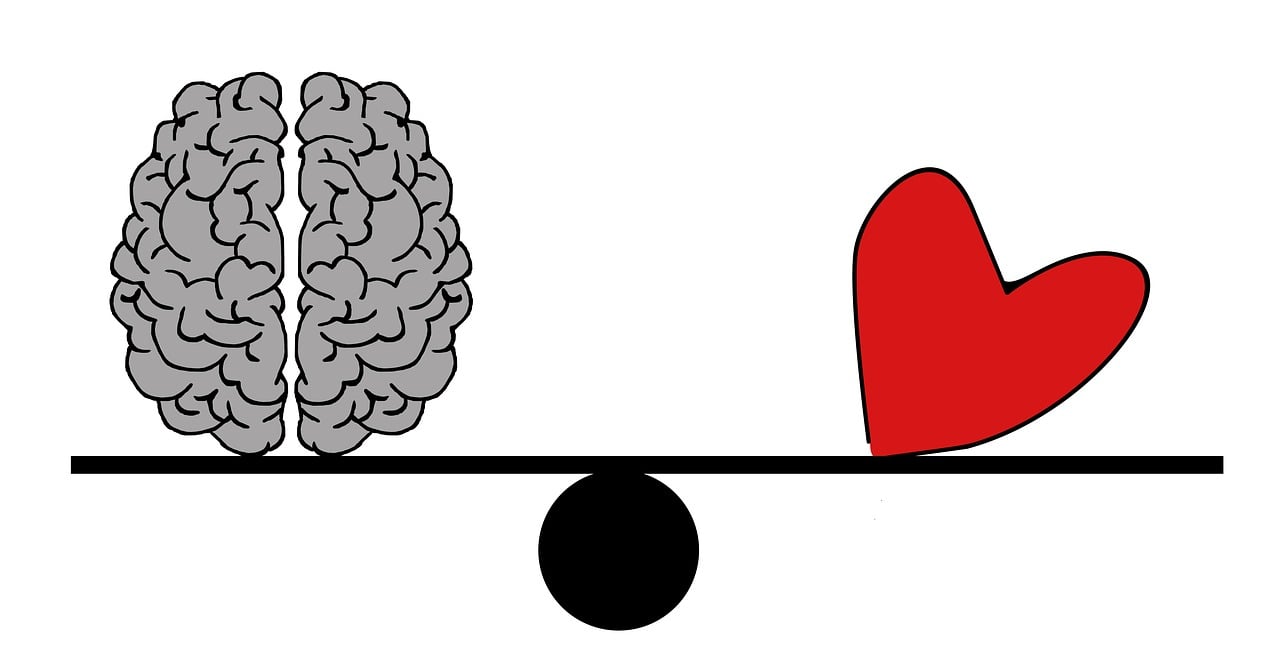
Successful workplace change requires far more than persuasion or well-crafted messaging. Real transformation happens when you change hearts and minds at work so that people are engaged at both an intellectual and emotional level — when they not only understand the direction but also feel connected to it and energized by it.
Change management consulting experts consistently emphasize that lasting behavioral shift depends on aligning both cognition and emotion. People need:
- Clarity about what is changing and why it matters.
- A sense of personal relevance, trust, and purpose that makes the change worth their commitment.
A compelling vision must stand up logically. It should clearly explain the case for change and surface a genuine dissatisfaction with the status quo. But logic alone is not enough. The most effective transformations also tap into something deeper — a meaningful purpose that resonates with people’s:
- Values.
- Identity.
- Aspirations.
When both the rational case and the emotional experience are aligned, change resistance decreases and engagement increases. That is where true momentum for change is created.
COVID-19 and Workplace Transformation: Lessons in Change Management, Leadership, and Employee Experience
The COVID-19 pandemic forced organizations into one of the most abrupt workplace transformations in modern history. What had long been considered stable operating models — office-based work, in-person collaboration, and predictable schedules — shifted almost overnight. Leaders were required to make decisions with limited information, balancing operational continuity with employee safety. The result was not just a logistical disruption, but a human one, reshaping how people experienced:
- Work.
- Connection.
- Uncertainty.
Disruption exposed both strengths and weaknesses in organizational systems. How organizations responded varied widely.
- Some took a transactional approach, focusing narrowly on continuity and compliance.
- Others leaned into empathy, recognizing that employees were navigating stress, caregiving responsibilities, and health concerns simultaneously.
Regardless of the approach, culture assessment data found that the most effective leaders:
- Communicated frequently.
- Acknowledged uncertainty.
- Avoided over-engineering solutions that ignored lived experience.
Looking forward, the most important lesson comes from how differently organizations and teams absorbed changes that were not purely structural at the emotional, behavioral, and cultural levels. Organizations that invested in change communication, psychological safety, and trust were better positioned to stabilize performance and retain talent during uncertainty.
Ultimately, the leadership capability to change hearts and minds at work became the differentiator between organizations that sustained performance and those that experienced prolonged disruption.
How Top Leaders Change Hearts and Minds at Work
Backed by change management simulation data, here are a few keys to effective behavioral change:
- Ensuring a Clear and Compelling Change Vision
Effective change begins with a vision for change that is both unmistakably clear and genuinely compelling. Leaders must be able to articulate not only what is changing, but why it matters in a way that people can understand, trust, and act upon. A strong rationale for change gives change direction; a compelling vision gives it meaning.
The COVID-19 pandemic created a rare context where the need for change was not optional or abstract — it was immediate, visible, and unavoidable. Organizations were forced to respond as workplaces closed, public health risks escalated, and uncertainty spread across every level of the workforce. In that environment, employees looked to leadership not for perfect answers, but for steadiness, clarity, and direction.
The most effective leaders did not attempt to eliminate uncertainty they could not control. Instead, they focused on what could be controlled. They communicated honestly and consistently, translated public health guidance into practical workplace expectations, and aligned policies with evolving CDC recommendations. Just as importantly, they created a sense of psychological team safety by acknowledging the strain employees were under and responding with visible support.
At the same time, leaders used change management training best practices to maintain connection and purpose, ensuring employees remained anchored to their roles even while physically dispersed.
What COVID revealed is that clarity alone is not enough. The most effective leadership combined clear direction with emotional steadiness and practical support. When people understand what is happening, believe their leaders are acting responsibly, and feel personally supported, they are far more likely to adapt and stay engaged — even under extreme conditions.
- Designing The Right Pacing for Sustainable Organizational Change
Effective organizational change rarely happens in a single, decisive moment. It unfolds in phases that require patience, persistence, and ongoing adjustment. Effective change leaders who underestimate pacing often encounter resistance not because the change is flawed, but because the timing and sequencing overwhelm the organization’s capacity to absorb it.
The early response to COVID-19 offers a clear illustration of how pacing shapes adoption. Practices such as mask-wearing initially felt unfamiliar and, for some, inconvenient. Yet over time, they became normalized as individuals understood both the personal and collective value. The behavior persisted not simply because it was mandated, but because people recognized its broader impact — reducing risk for themselves, their families, and their communities. What began as a reactive requirement gradually evolved into a shared team norm.
This progression underscores a critical principle in change leadership: adoption is not instantaneous, even when the rationale is strong. People move through stages of change readiness: awareness, resistance, experimentation, and eventual integration. Leaders who anticipate this trajectory are better equipped to reinforce progress without accelerating change to the point of change fatigue or disengagement.
In practice, successful change leaders calibrate the pace of transformation to match both change urgency and organizational change readiness. Some shifts demand immediate action, while others benefit from deliberate sequencing that allows new behaviors to take root. Misjudging this balance can either stall momentum or erode commitment.
Equally important is the continuous monitoring of how change is landing across the organization. Leaders must stay attuned to signals from the field — what is being adopted, where friction is emerging, and which groups may be lagging behind. This allows for timely reinforcement, targeted support, and, when necessary, recalibration of expectations.
Ultimately, pacing is not about slowing change down; it is about making it durable. When the rhythm of change aligns with human adaptability, organizations are far more likely to achieve sustained transformation rather than temporary compliance.
- Modeling by Leaders and the Power of Social Proof
One of the most powerful drivers of behavior change during the pandemic was visible leadership modeling. Leaders, public figures, and well-known personalities played a significant role in normalizing behaviors such as social distancing, frequent handwashing, and mask usage. Their actions sent a clear signal: this was not optional behavior at the margins, but expected conduct in a shared moment of risk.
At the same time, public change communication campaigns reinforced these behaviors by appealing to both logic and emotion. Messaging consistently emphasized collective responsibility—framing individual actions as contributions to a broader public good. The underlying narrative was simple but effective: we are interconnected, and our choices directly affect the wellbeing of others.
This alignment between visible role modeling and consistent messaging created a strong form of social proof. When people see leaders acting in a certain way, and when that behavior is reinforced through trusted channels, it becomes easier to adopt without prolonged resistance.
The broader lesson for organizations is clear. Change does not scale through communication alone. It accelerates when leaders embody the behaviors they expect from others. Employees are far more likely to embrace new norms when they see them consistently demonstrated at the top, reinforced across the system, and linked to a shared sense of purpose.
The Bottom Line
Bain reported that only 12% of change management initiatives achieve what they set out to do. Changes fail when employees are unconvinced that change is in their best interest. COVID proved that when new behaviors make sense rationally and are desirable emotionally, any change can succeed.
To learn more about how to change hearts and minds at work, download 5 Science-Backed Ways To Lead Change
Tristam Brown is an executive business consultant and organizational development expert with more than three decades of experience helping organizations accelerate performance, build high-impact teams, and turn strategy into execution. As CEO of LSA Global, he works with leaders to get and stay aligned™ through research-backed strategy, culture, and talent solutions that produce measurable, business-critical results. See full bio.





 0
0