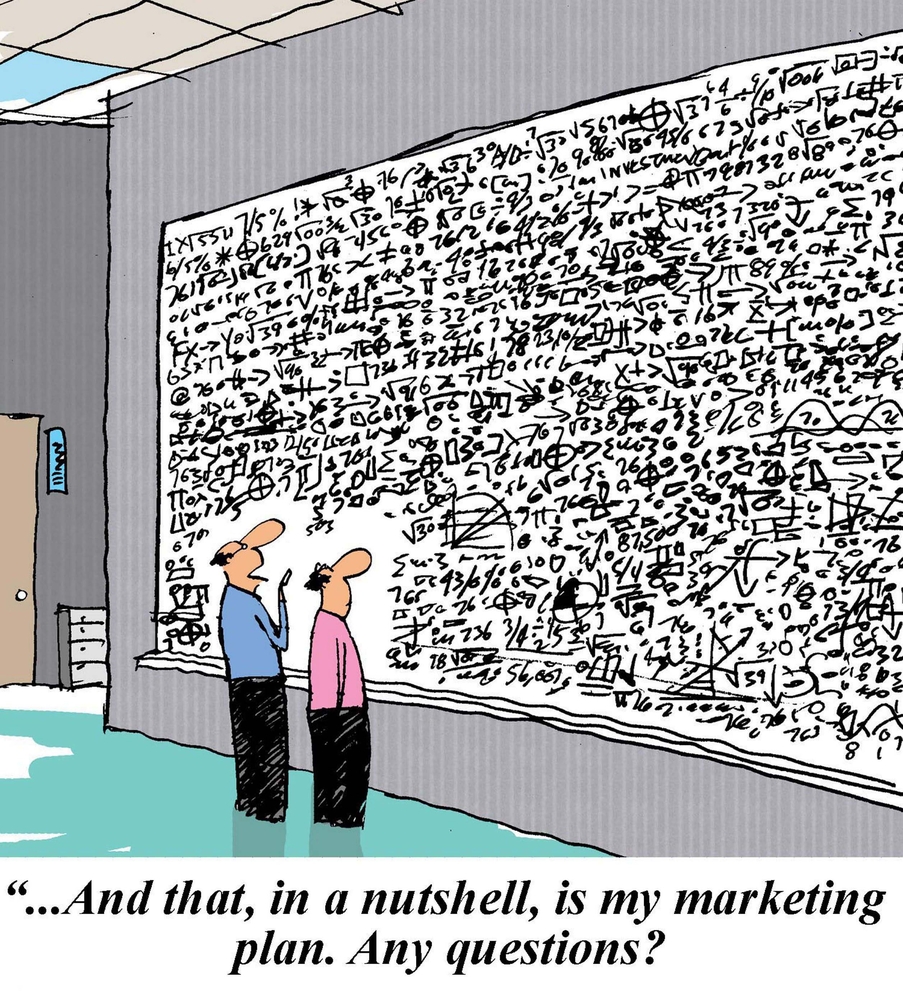


Unclear Business Strategies Are Hard to Execute
It may sound obvious, but unclear business strategies are almost impossible to execute effectively. Yet time and again, leadership teams assume that listing 20 or more “strategic initiatives” automatically equals clarity. When you ask employees, the reality is strikingly different — what leaders call a clear strategy often feels confusing, conflicting, and overwhelming on the front lines.
How to Increase Your Odds for Strategic Success
Project postmortem data shows that complex strategies rarely gain traction. Research consistently shows that simplicity drives execution, yet many organizations struggle to translate strategy into results.
The takeaway is simple: fewer, more focused strategic initiatives that are clearly communicated and reinforced stand a far better chance of moving the needle than a laundry list of “important” priorities.
Successful strategy execution is less about doing more and more about making fewer things crystal clear, then following through with discipline and accountability.
What is Strategic Clarity?
Strategic clarity goes beyond simply defining where to play and what actions to take. A truly clear strategy is one that every key stakeholder not only understands, but also believes in and can act on. You know your strategy is ready for execution when all key stakeholders:
To create a strategy that can actually be executed, focus on four critical “musts”:
The Bottom Line
Avoid becoming part of the majority whose strategies fail in execution. Begin with a plan that is simple, clear, and rigorously shaped through input and constructive challenge from across the organization. Then stay relentlessly focused on the end vision, communicate it consistently, and equip your teams with the resources and support they need to turn strategy into measurable results.
To learn more about avoiding the traps associated with unclear business strategies, download 7 Ways to Stress Test Your Strategic Clarity

Tristam Brown is an executive business consultant and organizational development expert with more than three decades of experience helping organizations accelerate performance, build high-impact teams, and turn strategy into execution. As CEO of LSA Global, he works with leaders to get and stay aligned™ through research-backed strategy, culture, and talent solutions that produce measurable, business-critical results. See full bio.
Mar 23,2026
 0
0

Mar 19,2026
0

Mar 16,2026
0
Mar 09,2026
0
Mar 05,2026
0
Mar 02,2026
0

Feb 11,2019
12 K

Apr 18,2017
10 K

Nov 20,2016
6 K

Oct 02,2017
5 K
Explore real world results for clients like you striving to create higher performance