


What Is The Correlation Between Employee Engagement and Performance?
The good news is that research proves that there is a positive correlation between employee engagement and performance. Highly engaged workplaces:
It can be said with confidence that employee engagement does indeed have a measurable impact on your bottom line.
5 Employee Engagement Factors that Struck Our Research Team
As part of our continual assessment of organizational culture, we conducted a study of twenty one organizations all of which were publicly traded and have conducted a Best Places to Work Employee Engagement Survey in at least three consecutive years. Each averaged more than 2,000 employees, and they represented different industries and diverse geographical areas. Five performance factors stood out regarding the positive correlation between employee engagement and performance.
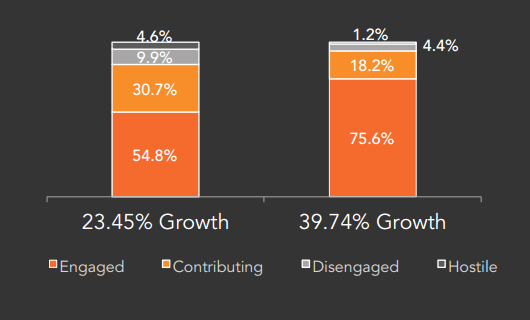
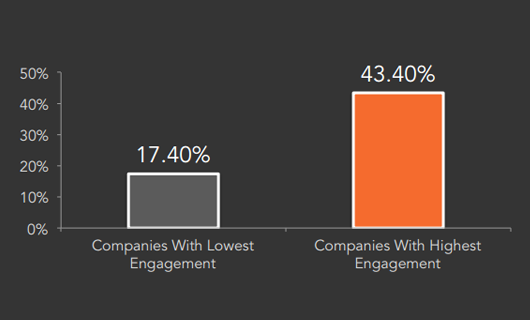
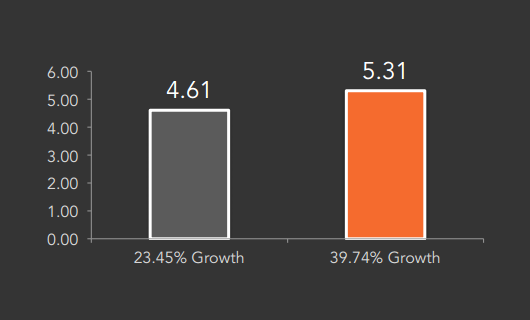
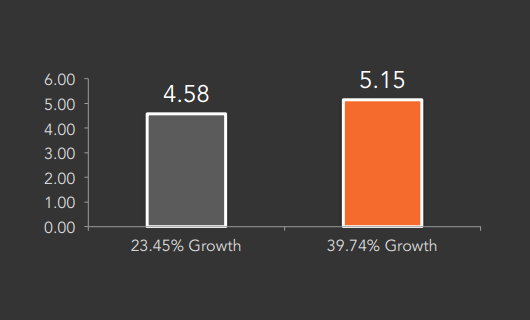
The Bottom Line
If you want to grow your company, make sure your people are working with you — not against you. Start by understanding the state of their engagement. Do they feel valued? Do they see meaningful career growth ahead? Do they trust their leaders to support, challenge, and guide them? Get clear, honest answers to these questions, then act decisively. Improving engagement is a direct path to stronger performance, higher retention, and a healthier, more resilient business.
To learn more about how to more effectively engage your workforce, download The Top 10 Most Powerful Ways to Boost Employee Engagement

Tristam Brown is an executive business consultant and organizational development expert with more than three decades of experience helping organizations accelerate performance, build high-impact teams, and turn strategy into execution. As CEO of LSA Global, he works with leaders to get and stay aligned™ through research-backed strategy, culture, and talent solutions that produce measurable, business-critical results. See full bio.

Mar 19,2026
 0
0

Mar 16,2026
0
Mar 09,2026
0

Mar 05,2026
0

Mar 02,2026
0

Feb 23,2026
0

Feb 11,2019
12 K

Apr 18,2017
10 K

Nov 20,2016
6 K

Oct 02,2017
5 K
Explore real world results for clients like you striving to create higher performance