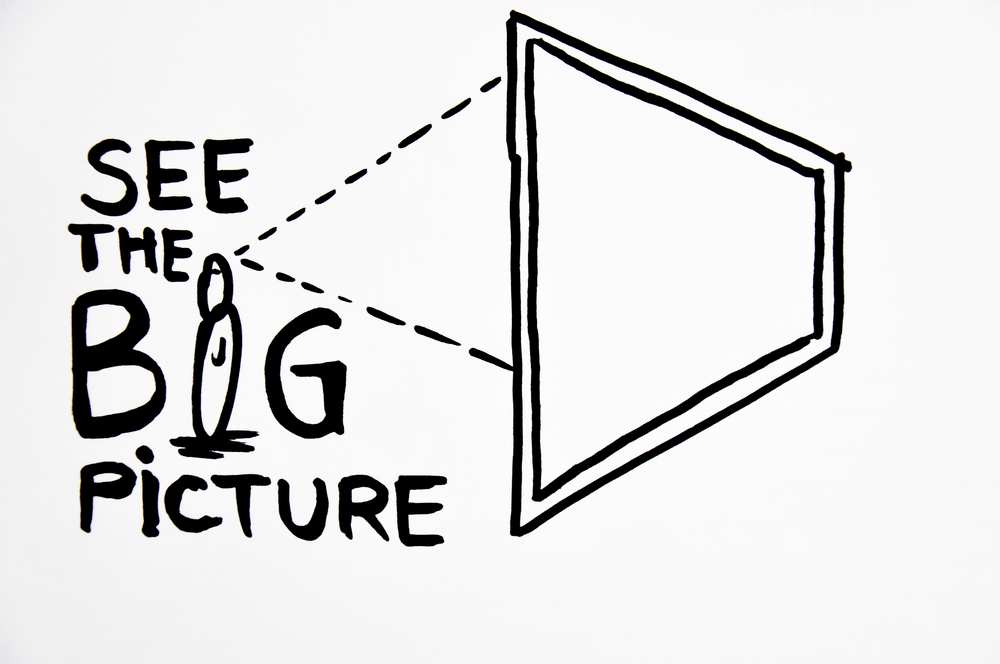


Strategic Thinking Behaviors: 3 Research-Backed Habits That Help Leaders See the Big Picture
Organizations increasingly expect leaders to demonstrate strong strategic thinking behaviors to:
Yet many leaders struggle to find time to think — let alone think strategically.
Project postmortem analyses consistently reveal the same challenge: as leaders advance into more senior roles, they feel increasingly consumed by operational demands and have less time to step back and consider the broader implications of their decisions.
This creates a significant leadership risk.
The skills that helped someone succeed as an individual contributor or frontline manager are not the same skills required to lead an organization. As responsibilities expand, leaders must spend less time reacting to today’s issues and more time anticipating tomorrow’s opportunities and risks.
What Does “Seeing the Big Picture” Really Mean?
Seeing the big picture is more than simply thinking about the future. It means consistently applying strategic thinking behaviors that enable leaders to recognize patterns, connect seemingly unrelated issues, and understand how decisions influence the broader organization.
Strategic thinking behaviors include the ability to:
Leaders who consistently practice these behaviors make better decisions because they understand not only what is happening today, but also what is likely to happen next.
Why Strategic Thinking Behaviors Matter More at Senior Levels
Organizations rely on executive teams to create strategic clarity, lead innovation, and make decisions that position the business for long-term success. Unlike functional leaders, executives are expected to integrate information across departments, evaluate external market forces, and allocate resources toward the organization’s highest priorities.
Rather than concentrating primarily on tactical execution, senior leaders must continually evaluate whether today’s actions support tomorrow’s strategy.
That shift requires disciplined strategic thinking.
Drawing upon data from our leadership action learning workshops and leadership simulation assessments, three strategic thinking behaviors consistently distinguish higher-performing leaders.
Strategic leaders naturally consider:
— How today’s decision affects other teams.
— What second- and third-order consequences may emerge.
— Whether the decision advances long-term strategic priorities.
— How success will be measured over time.
Instead of solving only the problem immediately in front of them, they evaluate the broader organizational impact before acting.
They stay informed about:
— Industry trends.
— Competitive activity.
— Customer expectations.
— Emerging technologies.
— Economic and regulatory changes.
Internally, they understand the organization’s evolving priorities by reviewing strategic plans, performance metrics, product roadmaps, and cross-functional initiatives. The broader their perspective, the better positioned they are to anticipate change rather than simply react to it.
— Strategic vision
— Mission
— Core values
— Unique value proposition
— Ideal customer profile
— Strategic priorities and investments
— Key strategy performance indicators
When leaders have a clear line of sight between daily execution and organizational strategy, they make better decisions, allocate resources more effectively, and help their teams focus on the work that matters most.
The Bottom Line
Strategic thinking behaviors require leaders to intentionally step away from daily demands, reflect on emerging trends, evaluate the broader implications of their decisions, and continually connect today’s actions with tomorrow’s objectives. Organizations that cultivate these habits create greater strategic clarity, make better decisions, and execute more effectively in an increasingly complex business environment.
Want to strengthen your strategic thinking behaviors? Download Is Your Strategy Clear Enough to Win? Take the Strategic Clarity Stress Test to uncover hidden gaps, improve strategic alignment, and increase execution success.

Tristam Brown is an executive business consultant and organizational development expert with more than three decades of experience helping organizations accelerate performance, build high-impact teams, and turn strategy into execution. As CEO of LSA Global, he works with leaders to get and stay aligned™ through research-backed strategy, culture, and talent solutions that produce measurable, business-critical results. See full bio.


Aug 17,2026
 0
0

Feb 11,2019
13 K
Apr 18,2017
11 K

Nov 20,2016
6 K

Oct 02,2017
6 K
Explore real world results for clients like you striving to create higher performance