


Smart Leaders Demand a Better Employee Engagement Strategy
Organizational culture assessment data finds that many organizations fall into what we call an “Engagement Funk.” Employee surveys can start to feel like a relationship that has long since left the honeymoon phase — routine, predictable, and lacking spark. Employees just go through the motions, checking boxes, and wondering if anything will ever change.
Employees may still be present, but their commitment, creativity, and discretionary effort are quietly eroding.
Leaders who recognize this reality know that repeating the same survey-and-report cycle won’t fix the problem. Engagement isn’t about one-off initiatives; it’s about creating experiences that inspire, challenge, and connect employees to the mission every day. It requires thoughtful strategy, targeted engagement actions, and ongoing dialogue — not just metrics that collect dust on a quarterly report.
Smart leaders don’t settle for surveys that merely report sentiment — they use engagement as a lever to shape a high performing culture, unlock potential, and build enduring employee loyalty. In short, they ensure employees don’t just survive, but thrive.
Before you give up and declare increased employee engagement a lost cause, take a step back. Many organizations fall into an “engagement funk,” but it’s fixable. Use this checklist to see if your program needs a reboot:
If these signs feel familiar, it’s time to move beyond routine surveys and build a better engagement strategy that actually energizes your people.
What To Do If You Checked Two or More of the Above Items
Whether you’re just starting with employee engagement surveys or already running advanced engagement programs, there’s always room to refresh and reinvigorate your efforts to attract, engage, and retain top talent. We can provide new ideas that spark inspiration and help you turn insights into meaningful action.
Remember—listening to your employees and acting on their feedback is never wasted effort. Every conversation is an opportunity to create real, lasting change.
Clearly map engagement to the bottom line and strategic priorities to reignite interest and commitment across the organization. Done thoughtfully, this approach not only reinforces the value of engagement but also uncovers actionable insights that propel your business forward.
When people see a clear connection between engagement and the results they care about, their commitment to your strategy naturally strengthens.
When people see a clear connection between how their success is measured and rewarded, engagement becomes part of how work gets done.
How Five Organizations Tied Engagement to Business Outcomes
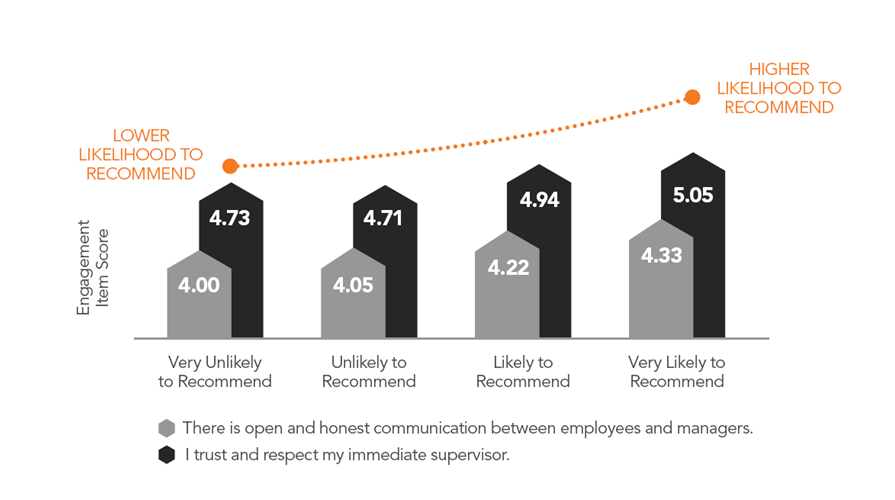
The analysis revealed a clear connection: advisers who scored highly on engagement items tied to manager effectiveness were more likely to have students who recommended the university. In other words, engaged employees — especially those with strong managerial support — directly influence positive outcomes for those they serve.
This case demonstrates how employee engagement extends beyond internal metrics to tangible organizational impact. Armed with these insights, HR teams can more effectively secure leadership and managerial buy-in for initiatives that drive meaningful change.
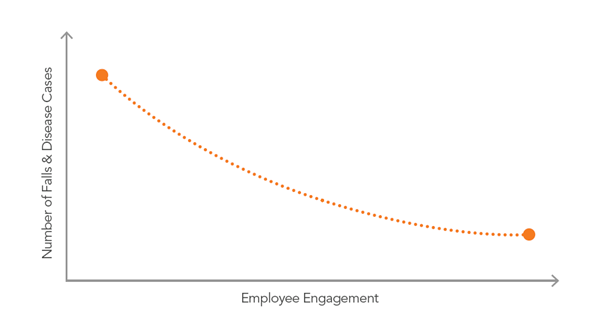
To demonstrate the value, the organization analyzed patient outcomes, including falls and cases of infectious disease, alongside engagement survey data. The findings were striking: higher employee engagement correlated with fewer patient incidents.
The organization crafted a presentation for its hospitals, translating the data into a story that resonated with staff. Because employees were deeply invested in patient well-being, linking engagement to what truly mattered to them created an emotional connection. This approach broke through stagnancy, driving real change in both attitudes and organizational performance.
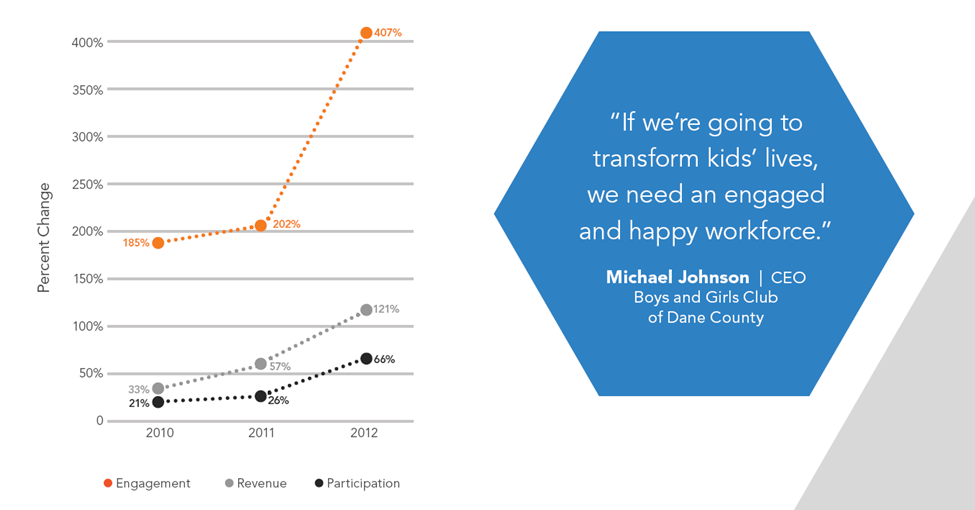
Over just three years, the organization doubled its revenues and expanded its reach, serving nearly 3,000 children — up from 1,800.
These results provide compelling evidence to the board and donors that investing in the employee experience doesn’t just improve employee satisfaction — it drives meaningful outcomes that advance the nonprofit’s mission.
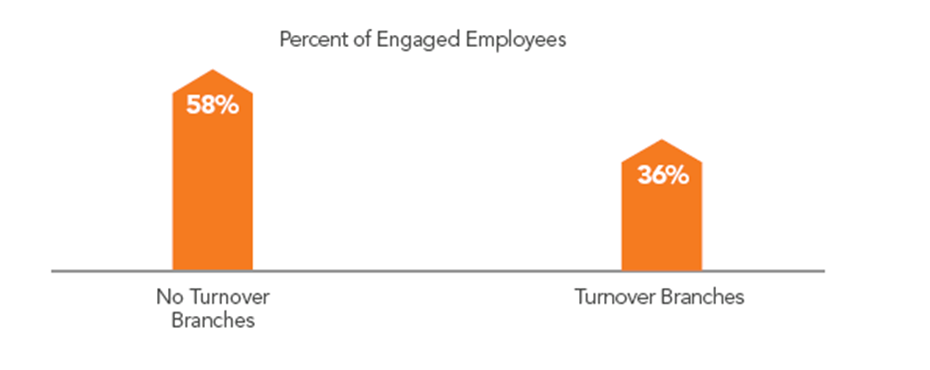
The analysis revealed several key insights:
— Branches with no turnover had an 83.5% survey response rate, nearly double the company average of 45.5%.
— Engagement was markedly higher in the no-turnover group: 58% of employees were fully engaged, compared with just 36% at other branches.
— Across all survey categories, the no-turnover group outperformed others by an average of 11 percentage points, with trust in senior leaders showing the largest gap.
— Of the ten survey items with the biggest differences, five were identified as key engagement drivers.
For this organization, employee engagement survey results now serve as a predictive indicator of turnover, giving leadership clarity on why some branches experience higher attrition than others. Armed with these insights, the leadership team can strategically focus engagement efforts where they matter most, creating a more targeted and effective approach to reducing turnover across the company.
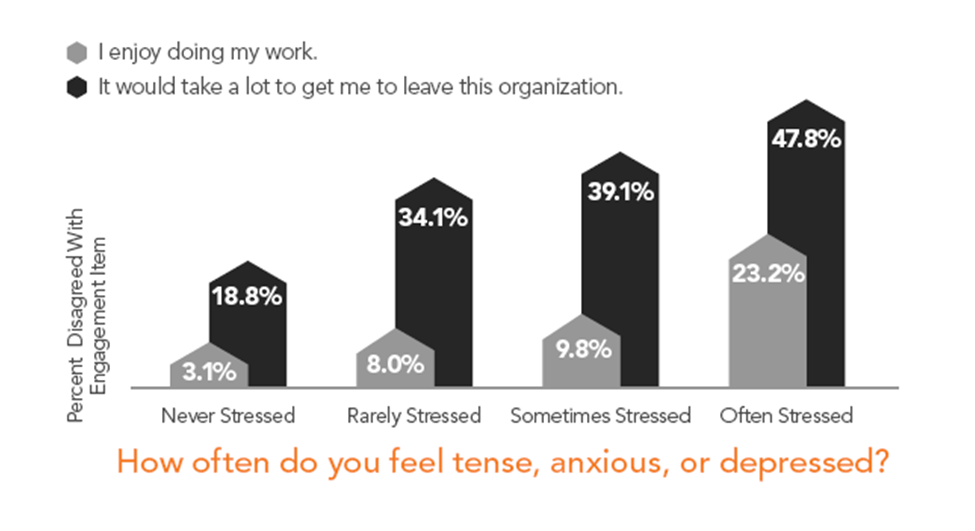
The analysis revealed a strong correlation between higher stress and disagreement with two key engagement survey items:
The Bottom Line
These examples illustrate the power of rethinking your employee engagement strategy. By connecting engagement to key business outcomes, your efforts gain clarity, purpose, and measurable impact — benefiting both the organization and the people who drive its success.
To learn more about a better employee engagement strategy, download The Top 6 Forces Driving Employee Engagement and Strategies to Move the Engagement Needle

Tristam Brown is an executive business consultant and organizational development expert with more than three decades of experience helping organizations accelerate performance, build high-impact teams, and turn strategy into execution. As CEO of LSA Global, he works with leaders to get and stay aligned™ through research-backed strategy, culture, and talent solutions that produce measurable, business-critical results. See full bio.

Feb 23,2026
 0
0

Feb 12,2026
0

Feb 12,2026
0

Feb 05,2026
0

Feb 02,2026
0

Jan 26,2026
0

Feb 11,2019
12 K

Apr 18,2017
10 K

Nov 20,2016
6 K

Oct 02,2017
5 K
Explore real world results for clients like you striving to create higher performance